FINANCING AVAILABLE

Asphalt Paving Specialists in Baltimore, MD
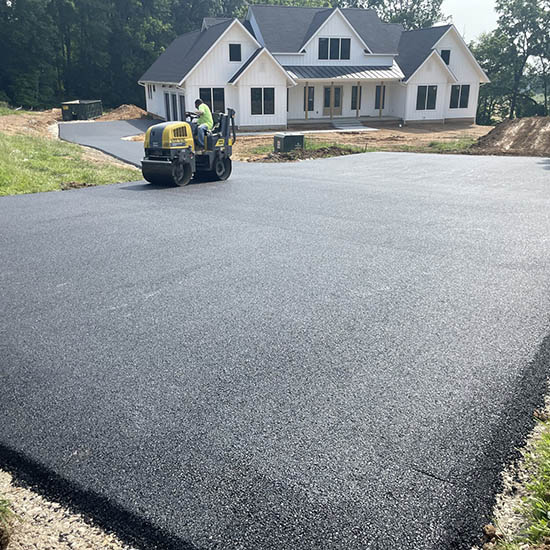
Goode Paving & Sealcoating Inc. has been a trusted name in asphalt paving across the Baltimore metro area for over 30 years. We help homeowners and businesses create smooth, safe, and great-looking surfaces—whether it’s a new driveway or a freshly striped parking lot. With over three decades of local service, we understand the specific needs of Maryland paved areas and deliver long-lasting results when we repair potholes or install a new driveway.
Trusted Asphalt Paving Solutions in the Heart of Maryland
Our work in the Baltimore region has included everything from parking lot installation and asphalt overlays to driveway resurfacing, crack filling, and sealcoating.
Many of our projects involve repairing and restoring older paved surfaces, adding new asphalt roads to subdivisions, and line striping parking lots for businesses. We also handle specialized needs such as chip seal applications, asphalt milling, and custom driveway installations, always focusing on quality materials and precise workmanship.
We’re proud to be a family-run business with deep roots in the community. It’s not just about asphalt—it’s about protecting your property and building trust. Whether you need basic repairs or a brand-new installation, we’re here to make the paving process easy and dependable.
Ready to start your next concrete or asphalt paving project in Baltimore? Contact Goode Paving & Sealcoating Inc to learn what we can do for YOUR Maryland property!
Services Offered in
Baltimore, MD
WHY CHOOSE US?
With decades of experience throughout Maryland, we take pride in delivering reliable asphalt paving with honesty, skilled craftsmanship, and a commitment to your satisfaction. Whether you’re dealing with potholes, cracks, or need a full refresh, we’ve got you covered.
Things To Do in Baltimore, MD

Baltimore, Maryland, is the largest independent city in the state and a cultural and economic hub for the region. Located along the Patapsco River near the Chesapeake Bay, Baltimore is home to more than 570,000 residents and serves as a vital center of commerce, shipping, and education for Maryland. Its historic neighborhoods, waterfront districts, and diverse communities contribute to the city’s unique identity.
Often referred to as “Charm City,” Baltimore is renowned for its vibrant harbor, thriving arts and music scene, and rich maritime heritage. It is also well-known as the birthplace of the American national anthem and the long-time home of writer Edgar Allan Poe, giving the city a strong cultural reputation.
There are lots of interesting Charm City landmarks, including the Inner Harbor and the National Aquarium. Institutions like Fort McHenry and Johns Hopkins University both draw residents and offer opportunities for visitors to experience something new or learn about local history.
Baltimore’s industries range from healthcare and education to shipping, manufacturing, and technology, making it a vital part of Maryland’s growth. Its sports culture, arts scene, and history as a port city have all shaped its strong local character and vibrant lifestyle.
Surrounding Baltimore are many suburbs where property owners also benefit from professional paving services:
Asphalt Services for Baltimore Property Owners
At Goode Paving & Sealcoating Inc., we care about keeping Baltimore moving—literally. Our team brings dependable asphalt services to city streets, suburban driveways, and everything in between. Built on trust, skill, and decades of experience, we’re proud to support our neighbors one paved surface at a time.
Need a new Baltimore parking lot? Want to resurface your residential asphalt driveway? Contact Goode Paving & Sealcoating Inc today for a quote or consultation.
Baltimore, MD Blog Posts
Is a Paving Contractor Right for Your Facility or Property?
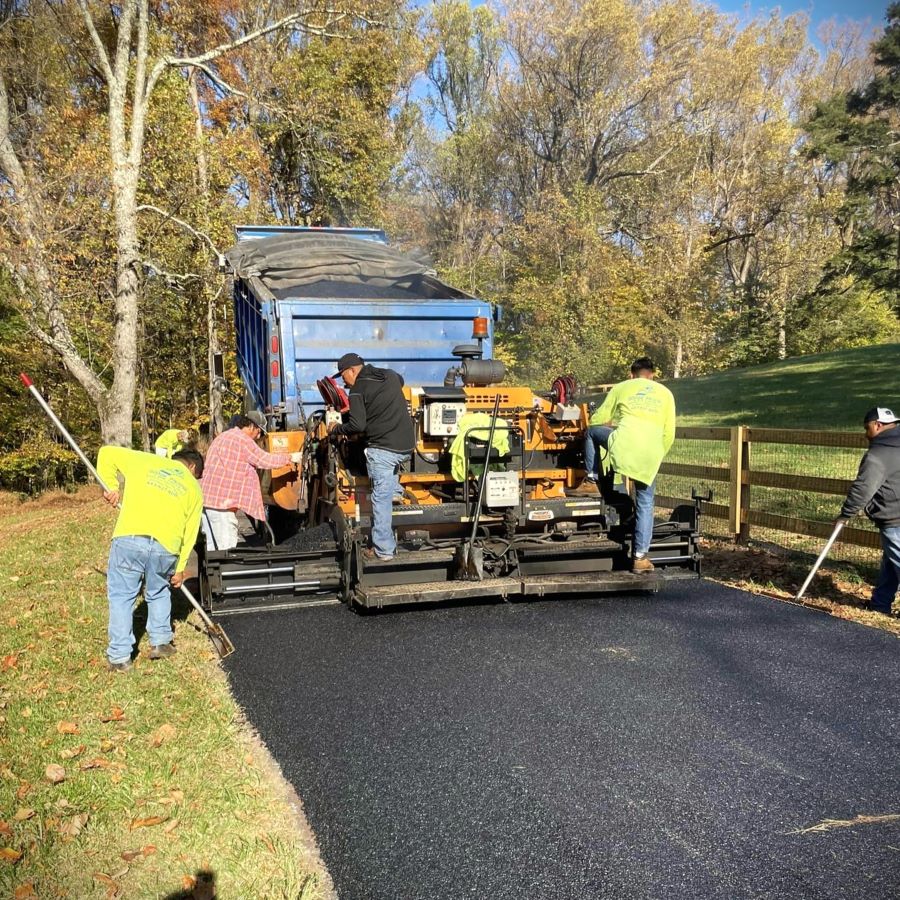 Cracked asphalt, pooling water, or a parking lot that looks rough around the edges can raise the same question for homeowners and property managers across Baltimore.
Do you patch it, or is it time to bring in a professional paving contractor?
In a city with heavy traffic corridors like I-95, freeze-thaw cycles off the Inner Harbor, and a mix of historic rowhomes and commercial facilities, paving decisions carry real long-term consequences.
Understanding when a paving contractor makes sense helps you protect your property value, safety, and budget. That starts with knowing what to evaluate and how to choose the right partner for your needs.
Key Takeaways
- Baltimore’s climate and traffic patterns make proper pavement design and drainage essential for long-term performance.
- The right paving contractor evaluates both surface issues and underlying base conditions before recommending work.
- Transparent pricing, scheduling flexibility, and material quality matter more than the lowest bid.
- Ongoing maintenance planning helps homeowners and commercial owners protect their paving investment.
Key Factors to Evaluate Before Hiring a Paving Contractor in Baltimore
Before signing a contract, it helps to step back and look at the realities of your property and this region. Baltimore’s climate, building stock, and regulations all affect paving outcomes.
Property Type and Usage Demands
A residential driveway in Canton or a rowhome alley in Hampden faces very different stresses than a commercial lot serving a retail plaza off Route 40.
Traffic volume, vehicle weight, and turning patterns determine pavement thickness and base preparation.
We look at how you actually use the space, not just how it looks today, so the pavement performs for years instead of failing early.
Local Climate and Drainage Conditions
Baltimore sees hot, humid summers and winters that bring freeze-thaw cycles.
Water intrusion is one of the biggest reasons asphalt fails around neighborhoods near the Patapsco River and low-lying areas of South Baltimore.
Proper grading and drainage design matter just as much as the surface layer. A paving contractor should account for stormwater flow, not just lay asphalt and move on.
Existing Pavement Condition and Base Integrity
Surface cracks can be misleading. In many older properties near Charles Village or industrial zones near Dundalk, the real issue is below the asphalt.
Base failure, poor compaction, or decades-old materials can make simple resurfacing a short-term fix.
A qualified paving contractor evaluates what is underneath, so you are not paying twice.
Compliance With Local Codes and Site Constraints
Commercial properties often need to meet ADA accessibility requirements, proper striping standards, and local permitting rules through the City of Baltimore.
Residential projects may face HOA guidelines in planned communities.
A paving contractor familiar with local inspection expectations helps you avoid delays, rework, or compliance headaches.
Safety and Liability Considerations
Uneven pavement, potholes, and faded markings are more than cosmetic issues.
For commercial facilities, they increase slip and trip risks, especially during wet conditions common around the harbor.
For homeowners, poor pavement can damage vehicles or create drainage problems near foundations. Addressing these risks early protects both people and property.
How to Choose the Right Paving Contractor for Your Budget, Timeline, and Long-Term Needs
Once you know what to look for, the next step is choosing a contractor that aligns with your priorities. Not all paving companies approach projects the same way.
Clear Scope and Transparent Pricing
A reliable paving contractor explains what work is included and why.
In Baltimore, paving estimates can vary based on access, staging space, and material availability.
We recommend looking for proposals that break down preparation, materials, and finishing so you understand what drives the cost.
This clarity helps homeowners and facility managers plan realistically.
Experience With Both Residential and Commercial Projects
Some contractors focus only on one type of work.
Properties near mixed-use corridors like Pratt Street or suburban neighborhoods in Towson often need a flexible approach.
Experience across residential driveways and commercial lots shows that a contractor understands different performance expectations, schedules, and coordination needs.
Scheduling That Matches Your Operations or Lifestyle
Timing matters.
Commercial clients may need work done in phases or after hours to keep tenants and customers moving.
Homeowners often want minimal disruption to daily routines and parking access.
A paving contractor should be willing to plan around Baltimore traffic patterns, delivery windows, and seasonal weather constraints.
Materials and Construction Practices That Last
Asphalt quality, compaction methods, and thickness choices directly affect lifespan.
In a region with heavy delivery trucks and frequent temperature swings, cutting corners shows quickly.
Asking how a contractor sources materials and handles base preparation tells you a lot about long-term value, not just upfront price.
Long-Term Maintenance and Support
Paving is not a one-and-done investment.
Sealcoating, crack filling, and periodic inspections extend pavement life, especially in areas exposed to salt and moisture during Maryland winters.
Choosing a contractor who offers ongoing maintenance helps you protect your investment and plan future budgets with fewer surprises.
Take The Next Step With A Local Paving Partner
If you are weighing whether a paving contractor is right for your driveway, parking lot, or facility, we can help you sort through the options. At Goode Paving & Sealcoating, Inc., we walk Baltimore property owners through condition assessments, realistic timelines, and cost ranges so decisions feel clear and controlled.
Call us or request an on-site evaluation this season to see what your pavement truly needs and how to move forward with confidence.
Frequently Asked Questions
How do we know if resurfacing is enough or full replacement is needed for our Baltimore property?
In most cases, we start with a site visit to review cracking patterns, base stability, and drainage. Widespread alligator cracking or settlement often points to base failure, while surface oxidation may only need resurfacing. Local soil conditions and water flow also factor into the recommendation.
What kind of timeline should we expect for a typical paving project in the city?
Residential driveways are often completed in one to two days, weather permitting. Commercial lots may take several days or be phased to maintain access. Permits, inspections, and material delivery schedules within Baltimore can add time, which we factor into planning.
Are there regulations we need to worry about for commercial paving work?
Commercial properties usually must comply with ADA slope and striping requirements and may require permits through the City of Baltimore. Coordinating with local inspectors and following code from the start prevents costly corrections later.
How can we extend the life of new asphalt after installation?
Routine sealcoating every few years, prompt crack repair, and proper drainage management make a big difference. Maryland winters and summer heat both stress asphalt, so preventive maintenance is far more cost-effective than premature replacement.
What Makes Commercial Asphalt Different From Residential Pavement
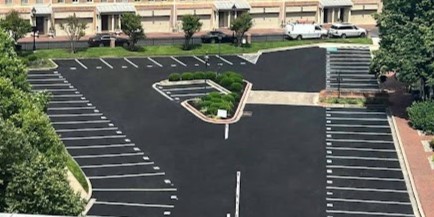 In Baltimore, commercial pavement takes a very different beating than a residential driveway in Hampden or Federal Hill. Heavy delivery trucks, constant turning movements, and strict inspection standards all change how asphalt has to be designed and built. If you manage a parking lot near the Inner Harbor or an industrial site off I-95, those differences affect cost, longevity, and compliance from day one.
Below, we break down what actually separates commercial asphalt from residential pavement and why it matters for your property.
Key Takeaways
- Commercial asphalt is designed for heavier loads, higher traffic, and stricter regulations than residential pavement.
- Material selection and thickness are critical for handling Baltimore’s climate and traffic patterns.
- Upfront costs are higher, but proper design reduces long-term repair and liability expenses.
- Planning, permits, and maintenance schedules are essential parts of any commercial paving project.
Key Differences Between Commercial and Residential Asphalt
When you look at commercial asphalt more closely, the differences from residential pavement consistently show up in three places:
Design Requirements
Commercial asphalt is designed around load distribution and traffic behavior, not just surface appearance. In Baltimore County, properties along freight routes like the Baltimore-Washington Parkway, near Port Covington, or close to industrial spurs routinely see tractor-trailers, refuse trucks, and delivery vehicles that exert many times the pressure of passenger cars.
Those loads are amplified at entrances, dumpster pads, loading docks, and turning radii where vehicles brake, pivot, and idle.
To handle that stress, commercial pavement systems are built with thicker asphalt courses over a more robust aggregate base. The base must be compacted to tighter tolerances and designed to shed water efficiently, which is critical in low-lying areas near the harbor or Patapsco watershed. Proper slope and drainage are not optional details.
They are required to prevent water intrusion that leads to base failure and to meet Baltimore City Department of Transportation standards as well as county stormwater regulations. Residential pavement, by contrast, is typically engineered for occasional passenger vehicle use with thinner sections and simpler drainage assumptions.
Material Composition
Commercial asphalt mixes are selected for strength, stability, and durability under sustained load. In the Baltimore region, that often means mixes with larger aggregate sizes, higher-quality binders, and performance grading that accounts for summer heat and winter freeze-thaw cycles.
These mixes resist rutting in high-temperature conditions and maintain flexibility during cold snaps, which helps limit cracking when moisture freezes and expands.
Residential mixes are usually optimized for light traffic and smooth appearance, not prolonged stress. When those lighter mixes are placed in commercial environments such as shopping centers in Towson or office parks in Catonsville, they tend to deform under repeated truck traffic.
The result is early rutting, surface cracking, and water pooling within just a few seasons. Using the correct commercial-grade mix upfront significantly reduces premature failures and costly corrective work.
Performance Expectations
Commercial pavement is expected to deliver consistent performance with minimal disruption to operations. A retail plaza on Eastern Avenue or a logistics facility near Dundalk depends on reliable access, safe pedestrian routes, and predictable traffic flow every day.
Pavement must support forklifts, pallet jacks, delivery schedules, and emergency vehicle access without creating hazards or forcing closures.
That performance standard goes beyond visual condition.
Commercial asphalt is evaluated on structural integrity, skid resistance, drainage, and regulatory compliance, including ADA accessibility requirements for slopes, crosswalks, and parking layouts. Residential pavement, on the other hand, is often judged primarily on appearance and comfort under light, infrequent use.
In commercial settings, durability, safety, and compliance are the benchmarks that determine whether pavement is doing its job or becoming a liability.
How These Differences Affect Cost, Maintenance, and Planning
Once those design, material, and performance differences are in place, they directly shape how commercial paving projects are budgeted, maintained, and scheduled.
For property owners and managers in Baltimore, this is where the technical distinctions become real operational considerations.
Cost Implications
Commercial asphalt costs more upfront because it involves thicker sections, stronger materials, and more extensive site preparation. In the Baltimore area, estimates for commercial paving can range widely depending on subgrade conditions, drainage needs, and access constraints.
Older sites near downtown often require additional excavation due to poor soils or outdated bases. While residential paving focuses on square footage, commercial pricing is driven by engineering and long-term performance.
Maintenance Strategies
Pavement maintenance planning is more structured for commercial properties.
Sealcoating schedules, crack filling, and striping are often tied to lease requirements or inspection cycles. Properties near busy corridors like Route 40 or I-83 experience faster wear from traffic and deicing chemicals used during winter storms.
A proactive maintenance plan helps extend pavement life and reduce liability from potholes or trip hazards, which is a major concern for commercial owners and property managers.
Project Planning and Scheduling
Commercial asphalt paving requires careful coordination. Permits, traffic control plans, and tenant communication all come into play, especially in dense areas like downtown Baltimore or near Johns Hopkins campuses. Work may need to happen overnight or in phases to keep businesses open. Residential projects rarely face these constraints.
Commercial planning also accounts for weather windows, as humidity and summer heat in Maryland can affect curing times and scheduling.
Schedule a Commercial Asphalt Evaluation in Baltimore
Commercial pavement is an investment, not a cosmetic upgrade. If your parking lot or roadway is showing signs of wear, waiting often increases repair costs and operational risk. At Goode Paving & Sealcoating, Inc., we help Baltimore-area property owners and facility managers understand what their pavement actually needs, not just what looks good today.
Contact us to schedule a site walkthrough, review traffic demands, and plan a compliant, durable asphalt solution that fits your operation.
Frequently Asked Questions
How do we know if our existing pavement was built to commercial standards?
A core sample and visual inspection usually reveal pavement thickness, base condition, and mix type. In Baltimore, older properties near industrial corridors often fall short of current standards, which explains recurring failures under truck traffic.
What codes or regulations affect commercial asphalt in Baltimore?
Projects often need to comply with local permitting offices, ADA accessibility guidelines, and stormwater management rules. Striping, slopes, and drainage details are commonly reviewed during inspections.
How long does a typical commercial paving project take?
Timelines depend on size, phasing, and access. Smaller lots may take a few days, while larger retail or industrial sites can require staged work over several weeks to maintain operations.
Can maintenance extend the life of older commercial pavement?
In many cases, yes. Crack filling, sealcoating, and proper drainage improvements can add years of service life, especially for properties exposed to heavy traffic and winter weather common in the Baltimore region.
5 Myths You Should Stop Believing About Asphalt Patching
 Baltimore property managers deal with freeze-thaw cycles that tear asphalt apart each winter, especially in neighborhoods like Hampden and Canton, where business storefront lots and small parking lots see steady use. Myths about patching often lead to repairs that fail fast in our mix of summer humidity and sudden cold snaps.
The truth is that proper patching depends on timing, materials, and techniques that match our local conditions. We clear up the biggest misunderstandings so you know what actually keeps pavement stable on Baltimore’s streets and access lanes.
Let’s start with the myths that cause the most confusion.
Key Takeaways
- A cold patch is a temporary stabilizer that prevents deeper asphalt damage.
- Hot mix repairs last longer when the base layer is stable and dry.
- Drainage and grading shape how well a patch performs in Baltimore.
- Sealcoating protects repairs but cannot replace structural patching.
1. Cold Patches Do Not Count as Real Repairs
Many business owners assume cold patch is useless, but it serves a real purpose when used correctly. Our crews rely on cold patch as a temporary stabilizer during winter in areas like Woodlawn commercial strip and Port Covington commercial sites, where hot mix plants shut down. This material keeps water from sinking into open potholes and prevents deeper cracking until a full hot patch is possible.
The misconception comes from using cold patch as the final fix, which fails fast once traffic and moisture build. Treat the cold patch as a seasonal holdover, not the final repair.
2. Patching Can Only Happen in Warm Weather
Plenty of Baltimore retail operators think asphalt work stops completely once temperatures drop, yet we complete stabilizing repairs year-round. Even in January, when conditions around Druid Hill Park swing between freezing mornings and mild afternoons, we can prepare surfaces and use approved mixes that resist moisture intrusion.
The key challenge is moisture, not simply temperature, and our methods adapt to both.
When property managers delay all services until spring, water damage often spreads under the surface. The safe approach is to ask for a quick assessment anytime new cracks open in your lot or loading area.
3. Larger Cracks Always Require Full Replacement
Some business owners assume any wide crack automatically means a full dig-out, but depth and base condition matter more than width alone.
In service alleys behind commercial buildings or parking structures near the Federal Hill business district, we often see broad cracks caused by shallow surface stress while the base remains firm. Cutting, cleaning, and compacting a hot patch can restore strength without touching the base layer.
Full replacement becomes necessary only when the base shifts or loses density. The practical step is to check the base first rather than jumping straight to replacement.
4. Sealcoating Works as a Substitute for Patching
Another myth suggests sealcoating can cover or hide structural damage. Sealcoat protects against UV rays and moisture, yet it cannot bridge gaps or stabilize weakened layers.
On small business lots in Lauraville and Guilford, cracked areas continue to spread under sealcoating because the coating is too thin to reinforce the surface. When property managers treat sealcoat like a repair method, they end up sealing in existing damage.
The better plan is to patch first, then sealcoat to keep that repaired section protected.
5. Asphalt Patches Always Look Mismatched
Many property managers worry patches always stand out across aging retail center pavement, but expert blending narrows the difference.
In areas like the Hamilton-Lauraville business corridor with decades-old asphalt, we often match a patch by adjusting compaction and finishing texture to suit the surrounding surface. Sun exposure and normal use help new patches blend with older pavement within a season.
Color differences mostly come from poor compression or cheap materials drying too light or too rough. A correct patch settles in quickly, especially after sealcoating.
What To Consider Once You Know the Truth About Proper Asphalt Repairs
Once the myths are cleared, a few practical details guide long-lasting repairs that fit Baltimore County’s climate and codes.
Material Choice Depends on Seasonal Conditions
Baltimore’s moisture-heavy summers and icy winters shape our material choices for each job. In commercial lots around Patterson Park and Highlandtown, surfaces that see heavy shade stay damp longer, so we rely on mixes designed to resist water intrusion.
Hot mix works best for structural strength in late spring through early fall when plants are fully operational. Cold patch covers emergencies but does not provide the density needed for long-term performance.
A solid approach is to match the material to the season and the location of the pavement.
Base Stability Determines Repair Lifespan
The base layer under the asphalt controls how long a patch holds up.
In areas like the Towson business district, where clay soil shifts during storms, we often strengthen or regrade base material before applying any surface patch. A weak base turns even a high-quality patch into a short-term solution because movement below the surface creates new cracks.
Assessing drainage patterns and soil compaction reveals where weaknesses hide. Once the base is solid, the patch stays stable through Baltimore’s freeze-thaw swings.
Drainage Patterns Affect Patch Success
Water is the main reason patches break down early. In areas like Otterbein, where commercial lots slope toward service alleys, runoff gathers along edges and accelerates erosion.
Before asphalt patching, we look for low spots or rutting that funnel water toward weak sections. Adjusting the grade or adding minor leveling keeps water moving away from the repair. Good drainage helps the patch stay tight and reduces freeze expansion in winter.
Local Codes Influence Repair Options
Baltimore County and city rules set standards for commercial patching, especially near sidewalks, alleys, and shared access points. In business corridors near Charles Village, mixed-use lots often need patching work that aligns with local permitting and ADA slope limits.
These guidelines affect material thickness, compaction, and tie-ins with curb lines.
Following local code avoids rework during inspections and ensures the patch meets long-term performance needs. Asking about code requirements at the start saves time and money later.
Maintenance Steps Protect New Patches
After patching, a few simple habits extend the life of the asphalt repair.
In lots bordered by mature trees, regular sweeping keeps debris from trapping moisture along patch edges. Sealcoating a few months after a hot patch adds UV protection and keeps oils from evaporating too fast.
Avoiding sharp turns or heavy loads on fresh patches prevents early scuffing. A little care during the first season sets the patch up for years of steady performance.
Get Asphalt Repairs That Last
Cracked or sinking spots can feel stressful when you do not know what to trust or what steps to take next. You now understand how myths hide the real causes of pavement failure and why proper repairs depend on timing, materials, and base strength. At Goode Paving & Sealcoating, Inc., we match every repair to Baltimore’s weather patterns, codes, and surface conditions so your lot, storefront parking area, or access lane stays reliable season after season.
Reach out today for a quick assessment and a clear plan for patching that holds up.
Frequently Asked Questions
How do I know if my commercial parking lot in Baltimore needs a patch or a full replacement?
The base layer tells us what you need because a stable base in areas like the Butcher’s Hill and Highlandtown commercial corridors often supports a durable hot patch even when cracks look wide on the surface.
Can you perform asphalt patching during cold months in Baltimore?
Our crews complete winter stabilizing work using moisture-resistant mixes that perform well in loading zones, commercial lots, and retail parking areas, where freeze-thaw swings happen often.
How long does a hot patch last on a commercial lot in Baltimore?
A well-compacted patch on a solid base usually lasts several years, especially when the surface drains correctly and receives sealcoating after the curing period.
Do I need permits for patching work on a small commercial lot in the city?
Local rules often require permits near sidewalks or alley entries, and we coordinate those requirements for business owners around Charles Village and similar districts.
How to Save on Driveway Paving Without Cutting Corners
 Paving a driveway in Baltimore isn’t a small expense, especially if you want something that lasts through our freeze-thaw cycles, heavy rainfalls, and the weight of city traffic. But here’s the good news. You can save money on your driveway project without ending up with cracks, drainage issues, or a surface that starts falling apart after one winter.
Below, we’ll walk you through the hidden expenses that catch many folks off guard and the smart ways you can reduce your costs without settling for poor workmanship or cheap materials.
Key Takeaways
- Driveway paving in Baltimore often costs more because of hidden issues many homeowners don’t know to plan for.
- Old pavement removal, utility conflicts, and poor drainage are common problems that quickly increase project costs.
- Smart planning around timing, materials, and bundled services can lower costs without sacrificing durability or quality.
- Local contractors bring essential knowledge about Baltimore’s rules, weather, and soil that out-of-town crews often miss.
Identify the Hidden Factors That Make Driveway Paving More Expensive
Homeowners across Baltimore often come to us frustrated by how much more their driveway paving project ended up costing than expected. The truth is, most of those extra charges come from details that get missed early on—things a good contractor should plan for.
Here are the hidden costs that drive up paving jobs in Baltimore and how to avoid them:
Removing Old Concrete or Asphalt Improperly
In many older Baltimore neighborhoods like Mount Vernon or Charles Village, we often encounter driveways that were paved decades ago using outdated materials. If your contractor doesn’t properly account for the cost and time needed to break up and haul away that old concrete or asphalt, you’ll likely see an unexpected charge later.
Disposal fees at local facilities like the Quarantine Road Landfill aren’t cheap, and cutting corners here can lead to leftover debris beneath your new driveway, which affects the final quality.
Poor Planning Around Underground Utilities
Driveways in areas like Catonsville or Towson often cross paths with underground gas, water, or electrical lines.
If your paving contractor doesn’t coordinate with BGE (Baltimore Gas and Electric) or use the state’s Miss Utility marking service before digging, a surprise utility strike can lead to costly repairs and serious delays. Plus, it’s a safety risk. Homeowners can be left footing the bill if proper checks aren’t done up front.
Ignoring Drainage and Slope Issues
Baltimore’s topography varies significantly, especially in areas like Bolton Hill and Reservoir Hill, where steep slopes and old infrastructure can create serious drainage issues.
If your contractor doesn’t assess and design for water runoff, you could end up with pooling or erosion after the first heavy storm—both of which require costly fixes.
Grading isn’t just a nice-to-have; it’s a must in many parts of the city.
Using Low-Grade Materials in High-Traffic Zones
We see this often in neighborhoods like Highlandtown, where driveways are used by multiple vehicles or even small delivery vans. Opting for thinner asphalt layers or lower-quality aggregate to save money may seem smart initially, but the surface wears out fast under regular use.
Over time, you’ll end up paying more for repairs or full replacement. It’s better to choose materials that are designed for your expected traffic volume.
Overlooking Permit Requirements and Local Codes
In Baltimore County, any significant alteration to a driveway often requires a permit from the Department of Transportation. Some homeowners assume paving is too minor to need one, but skipping this step can lead to fines or required rework.
In historic districts like Fells Point, there are also aesthetic requirements that need to be met. A reliable contractor should factor this into both the timeline and budget from the start.
Choose the Right Time of Year for Paving
We always recommend booking driveway projects in late spring or early fall in Baltimore, when the temperatures are ideal for proper asphalt curing.
Trying to pave during extreme summer heat or winter cold, especially near the harbor or in wind-prone areas like Dundalk, often leads to weaker bonds and shorter pavement lifespan. Scheduling during the optimal season can save you from premature repairs and give you better pricing due to lower demand.
Get a Detailed Site Evaluation Upfront
One of the best ways to keep your paving project on budget is to start with a comprehensive site inspection.
In places like Parkville or Pikesville, where soil conditions can shift significantly from one street to another, we often find soft spots, tree root issues, or unexpected elevation changes.
Addressing these early helps us build a proper base and avoid costly surprises mid-project. Many cheaper contractors skip this step—and it shows in the final result.
Select a Surface Material That Matches Your Needs
Not every driveway in Baltimore needs the same type of material.
For example, homeowners in suburban areas like Perry Hall may benefit from traditional asphalt, while tight urban spaces in neighborhoods like Locust Point might do better with decorative concrete or permeable pavers to meet stormwater management codes.
Choosing the right material for your property’s function and location reduces long-term maintenance costs.
Bundle Sealcoating or Maintenance Services
If you’re paving a new driveway, consider bundling it with a long-term maintenance plan.
In areas where road salt and plowing are common in winter—like in northwest Baltimore near Cheswolde—sealcoating can significantly extend your driveway’s life.
Getting this bundled as part of the initial job often comes at a lower price than adding it later. It also helps lock in today’s prices before inflation or material shortages hit.
Work With a Local Contractor Who Knows the Area
Hiring a national chain or out-of-town crew might seem cheaper on paper, but they often miss key local factors like Baltimore’s clay-heavy soil, strict zoning regulations, or drainage quirks along older streets. We’ve worked on properties from the Inner Harbor to Overlea and understand the nuances of each area.
That local experience means fewer mistakes, faster approvals, and a driveway built to last.
Don’t Settle for a Cheap Driveway That Won’t Last
If you’re planning a new driveway in Baltimore, it’s tempting to chase the lowest quote. But as we’ve seen time and time again—from crumbling edges in Lauraville to drainage backups in Waverly—cheap work usually comes back to bite you.
At Goode Paving & Sealcoating, Inc., we help homeowners across Baltimore build better driveways without wasting money. We’ll walk your property with you, explain every cost clearly, and offer smart suggestions that keep your project on budget and up to code.
Let’s pave a driveway that lasts.
Contact us today to schedule a site evaluation or request a custom quote.
Frequently Asked Questions
How long does a newly paved driveway in Baltimore typically last?
A properly paved and maintained asphalt driveway in Baltimore usually lasts 15 to 20 years, depending on weather exposure, base preparation, and regular upkeep like crack sealing and sealcoating services.
What type of maintenance does my driveway need after paving?
After paving, your driveway will need sealcoating every few years, crack repair as needed, and proper snow removal to prevent surface damage during Baltimore’s harsh winter conditions and freeze-thaw cycles.
Can you widen or extend an existing driveway in Baltimore?
We do offer driveway widening and extensions, but they must meet Baltimore zoning codes, property line setbacks, and sometimes require permits, depending on the neighborhood and project scope.
Is there a difference between residential and commercial driveway paving?
Residential paving typically requires lighter materials and thinner base layers, while commercial driveways need reinforced surfaces to handle heavy vehicles. We tailor paving services to fit each property’s specific traffic use.
How to Prepare Your Property for Upcoming Asphalt Repair
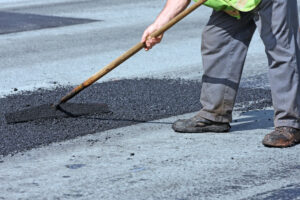 When you schedule asphalt repair in Baltimore, you’re making a smart investment in your property’s safety, appearance, and long-term value. Whether you’re managing a commercial lot in Hampden or a long private driveway in Roland Park, proper preparation ensures the work gets done efficiently and the results last.
At Goode Paving & Sealcoating, Inc., we often find that the most successful repairs start with a well-prepared site—because even the best paving work can be compromised if the property isn’t ready when we arrive.
Here’s what you can do ahead of time to make your next asphalt repair project smooth and stress-free, from a local contractor’s perspective.
Key Takeaways
- Clear communication and early planning help avoid delays when preparing your Baltimore property for asphalt repair.
- Moving vehicles, trimming landscaping, and marking underground systems create a clean and safe space for repair crews.
- Local weather, trash pickup schedules, and limited access points in Baltimore can impact repair timing and quality.
- A licensed contractor and proper curing time ensure your repaired asphalt lasts through Baltimore’s seasonal wear and tear.
Notify Tenants, Employees, and Delivery Services in Advance
Communication is key, especially in neighborhoods like Fells Point or Federal Hill, where limited street parking and tight access points can make construction work disruptive. If you’re managing a multifamily property or a business, let everyone know about the scheduled asphalt repair.
Post signage around the area and email tenants or employees a few days in advance.
This gives people time to adjust their schedules or parking plans, which helps avoid confusion and ensures we can work without delays.
Clear All Vehicles and Obstructions From the Work Area
On the day of the repair, every vehicle and movable object should be removed from the driveway or parking lot. In areas like Canton or Mount Vernon, where space is already limited, even a single car left behind can delay the job.
It’s also important to check for trash bins, planters, or portable basketball hoops—anything that might be in the way needs to be moved to a secure location until the job is done.
We can’t do high-quality work unless the entire surface is clear and accessible.
Trim Landscaping Near the Pavement
Baltimore’s warm, humid summers encourage lush growth, especially in tree-lined areas like Guilford or Homeland. Overhanging branches, creeping shrubs, or weeds growing along the pavement edge can get in the way of our equipment and even interfere with the new asphalt’s curing process.
Before your scheduled service, take some time to trim back any vegetation that borders your asphalt surface. This simple step goes a long way toward keeping the work area clean and the final result looking sharp.
Mark Underground Utilities and Irrigation Lines
If you have sprinkler systems, landscape lighting, or shallow utility lines running near the pavement, it’s essential to let us know.
In older Baltimore neighborhoods like Bolton Hill or Reservoir Hill, many properties have non-standard utility layouts, and it’s not always easy to spot hidden lines. Flag or mark any known irrigation heads or underground components so we can avoid damaging them during the repair process.
If necessary, we’ll coordinate with Miss Utility of Maryland to locate and mark utility lines.
Ensure Pets and Children Stay Clear of the Work Zone
Asphalt repair involves heavy equipment, hot materials, and constant movement. None of which mix well with curious kids or roaming pets.
In residential areas like Lauraville or Bayview, it’s common to see little ones playing outdoors after school, especially when the weather’s nice. Please make arrangements to keep children and pets indoors or safely away from the work zone during the repair and curing process.
This keeps everyone safe and helps us work without interruptions.
Other Things You Should Keep in Mind Before Asphalt Repair
Preparing your property is just one part of the equation. There are also a few key details that can affect the timing, quality, and overall success of the repair itself.
Here’s what else you should stay ahead of:
Be Prepared for Temporary Access Restrictions
During the repair process, you may not be able to access certain parts of your property for several hours or even a full day.
In high-traffic areas like Charles Village or near Johns Hopkins campuses, this can disrupt daily routines. Make arrangements in advance for alternate parking or entry points.
If you’re running a business, consider doing repairs during off-hours or weekends to minimize the impact on customer access.
Pay Attention to Upcoming Weather Patterns
Baltimore’s climate is unpredictable. One minute it’s sunny, the next, you’re dealing with a pop-up thunderstorm off the Chesapeake Bay. Fresh asphalt needs time to cure, and rain or high humidity can affect the finish and longevity.
We closely monitor local forecasts from sources like WBAL-TV or NOAA, but it’s good for property owners to do the same. If there’s a major storm system coming, we may need to reschedule for the sake of quality and safety.
Schedule Trash Pickup Before the Repair Day
If your regular trash pickup falls on or near the repair day, it could interfere with access to the area. This is especially true in rowhome-heavy neighborhoods like Highlandtown, where alleys and driveways are narrow and trucks need full clearance.
Contact the Baltimore City Department of Public Works in advance to make adjustments if necessary. Ensuring that the work zone is clear of trash bins helps us stay on schedule and avoid any unintentional damage.
Confirm Your Asphalt Contractor Is Licensed and Insured
This might seem like a given, but not every contractor working in Baltimore County is playing by the rules. Especially for commercial lots in places like the Inner Harbor or along Reisterstown Road, you’ll want to confirm that any work done is compliant with Baltimore City codes and comes with proper documentation.
Don’t Forget About the Curing Time
Once the repair is complete, the asphalt needs time to properly cure and harden.
Depending on the temperature and humidity, this can take 24 to 72 hours. In the summer heat of South Baltimore or near the waterfront in Locust Point, it may cure a little faster, but it’s still crucial to stay off it until we give the green light.
Driving or walking on it too soon can leave marks or cause long-term damage, especially on freshly filled cracks or patches.
Get the Best Results from Your Asphalt Repair
If you’re unsure about anything—whether it’s scheduling, utility markings, or how to prep your landscape—just ask. We’re happy to walk you through it.
At Goode Paving & Sealcoating, Inc., we bring over 30 years of experience serving the Baltimore area with expert asphalt repair, paving, and sealcoating services. Whether it’s a patch job in Parkville or a full resurfacing in Ellicott City, we’ve seen it all and handled it all.
Ready to schedule your repair or request a quote?
Give us a call today or fill out our quick contact form to get started.
Frequently Asked Questions
Can you repair asphalt during the winter in Baltimore?
Winter repairs are possible but limited. Cold temperatures affect how asphalt sets, so we typically recommend temporary patching until spring. We offer cold mix solutions for emergency repairs during freezing months.
Does asphalt repair fix potholes permanently or just cover them?
We don’t just fill potholes—we cut, clean, and rebuild the damaged area to prevent it from returning. This full-depth repair method ensures long-term durability on Baltimore’s heavily used streets and driveways.
How can I tell if my asphalt has base failure?
If your surface has deep cracks, sinking spots, or repeated potholes, the issue likely goes beyond the top layer. We inspect and identify base failure before recommending full-depth patching or replacement services.
Do you offer maintenance plans after asphalt repair is completed?
Yes, we offer sealcoating, crack sealing, and ongoing maintenance plans to extend the life of your asphalt. Routine care helps prevent major repairs and keeps your surface in good shape year-round.
What to Expect from a Professional Paving Contractor on Day One
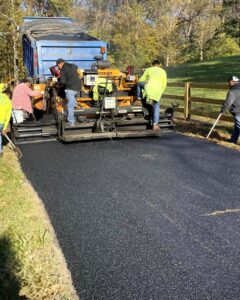 Hiring a paving contractor in Baltimore isn’t just about getting a new asphalt surface—it’s about trusting someone to improve the value, function, and curb appeal of your property.
Whether you own a home in Roland Park, manage a commercial lot near Inner Harbor, or maintain apartment parking near Charles Village, the first day of any paving project sets the tone for everything that follows.
At Goode Paving & Sealcoating, Inc., we know that first impressions matter. Here’s what you can expect from our crew on day one when we arrive at your site in Baltimore, MD.
Key Takeaways
- The first day of paving in Baltimore begins with punctual arrival, clear communication, and a detailed site walk.
- A full inspection checks drainage, base stability, and BGE utility markings to prevent costly surprises during construction.
- Job site protection, safety compliance, and careful equipment staging prepare homes and businesses for a smooth paving process.
- Strong base preparation and Goode Paving & Sealcoating, Inc.’s experience set the foundation for lasting Baltimore pavement.
A Timely Arrival With Clear Communication
You’ll know exactly when to expect us—because we call ahead and show up on time. Navigating Baltimore traffic, especially around congested corridors like I-83 or Pulaski Highway, is part of our daily routine, and we build that into our schedule.
When our crew arrives, you won’t be left wondering what’s happening next. We introduce ourselves, confirm project details with you, and walk the site together so we’re aligned on expectations before work begins.
This is especially important in tight residential areas like Canton or Highlandtown, where access and logistics need to be addressed right away.
A Thorough Site Inspection and Prep Walk-Through
Before any equipment hits the ground, we take a close look at your site to double-check drainage slopes, boundaries, base conditions, and traffic patterns.
In neighborhoods like Federal Hill or Mount Vernon, where older infrastructure and narrow alleys can impact the scope of work, this extra attention ensures we don’t run into avoidable surprises later. We’ll also identify any local code requirements or utility markings—like those from Baltimore Gas and Electric (BGE)—that might affect excavation or base work.
This walk-through gives you a chance to ask questions and helps us fine-tune our plan in real time.
Job Site Protection and Safety Setup
Baltimore is known for its mix of old brick rowhomes and newer commercial developments, and each project brings unique challenges. On day one, we make sure your property and surrounding areas are protected before any heavy machinery starts up.
That means using safety barriers in busy spots like Park Heights Avenue, marking pedestrian walkways, and taking precautions near structures or landscaping.
Our crew follows both OSHA safety standards and Maryland-specific requirements to minimize risk for everyone on site, whether it’s a homeowner, business tenant, or foot traffic passing by.
Equipment Setup and Materials Delivery Coordination
We don’t just show up and start paving. We set the stage for a smooth operation. In areas like Dundalk or Essex, where space is tight, staging equipment and materials like hot mix asphalt, stone base, and compaction gear have to be done with care.
We coordinate deliveries with local suppliers and ensure trucks follow approved routes to avoid disturbing residential streets or violating Baltimore City’s commercial traffic rules.
That kind of planning makes a difference when you’re working around school zones, business hours, or narrow alleys off North Avenue.
Pre-paving Base Preparation and Layout Marking
In most Baltimore projects, especially in older neighborhoods with settled soil or crumbling surfaces, proper base prep is crucial.
On the first day, we focus on grading and compacting the sub-base to create a stable foundation for the new asphalt. We use string lines, chalk, and marking paint to define the layout, making adjustments based on field conditions.
Whether we’re regrading a sloped driveway in Locust Point or prepping for a full parking lot restoration in Hampden, we lay the groundwork—literally—for a smooth, durable finish that lasts through Maryland’s freeze-thaw cycles.
Get Your Paving Project Started Right
When the first day goes right, the rest of the job follows smoothly.
At Goode Paving & Sealcoating, Inc., we treat day one as the foundation of your entire experience—and we make sure it’s done with precision, professionalism, and clear communication.
From navigating Baltimore’s tight streets to ensuring proper base prep for long-lasting results, we bring the experience and equipment to get the job done right the first time.
If you’re planning a paving project in Baltimore—whether it’s a driveway in Guilford or a commercial lot near Johns Hopkins Hospital—don’t leave that first day to chance.
Contact us today to schedule your consultation and see how we start strong so your pavement holds strong.
Frequently Asked Questions
How long does a typical paving project in Baltimore take after day one?
Most driveway projects take two to three days, while larger commercial paving near areas like Inner Harbor or Towson may last up to a week, depending on size and curing time.
Can paving be done year-round in Baltimore’s climate?
Paving is most reliable in spring through fall, since Baltimore’s cold winters and frequent freeze-thaw cycles make asphalt curing difficult and reduce long-term durability if installed during colder months.
Do you handle permits for paving projects in Baltimore City and County?
Yes, we manage required permits for both residential and commercial projects, ensuring compliance with Baltimore City Department of Transportation and Baltimore County guidelines so property owners avoid delays and penalties.
What maintenance should be expected after new pavement is installed?
Routine sealcoating every few years, especially after the first year, helps Baltimore pavement resist cracking from traffic, road salt, and seasonal weather changes, protecting long-term value for homeowners and businesses alike.
How Does Humidity in Baltimore Affect Your Asphalt Maintenance Plan?
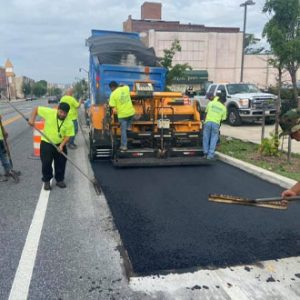 As anyone who’s lived through a Baltimore summer knows, the humidity here is a major factor in how we build and maintain just about everything, including asphalt surfaces.
Between the moisture-heavy air rolling off the Inner Harbor and the constant freeze-thaw cycles we get in neighborhoods like Roland Park and Highlandtown, your asphalt driveway or parking lot in Baltimore needs a tailored maintenance approach.
Let’s break down how the local high humidity specifically impacts your asphalt maintenance plan, and what you should be doing to stay ahead of problems before they get costly.
Key Takeaways
- Baltimore’s humid climate affects how asphalt holds up, making local weather a key factor in maintenance planning.
- Moisture in the air weakens asphalt over time, especially in high-traffic areas like North Charles Street.
- Heat and humidity speed up surface aging and cracking, with faster wear in sunny spots like Federal Hill.
- Frequent freeze-thaw cycles, mold growth, and slow drying times require smart, seasonal upkeep across Baltimore neighborhoods.
Moisture Absorption Weakens the Asphalt Binder
High humidity in Baltimore means more airborne moisture. And that moisture doesn’t just hover in the air; it gets absorbed into porous asphalt surfaces.
In areas like Mount Vernon or Canton, where older paving jobs are common, the asphalt binder can begin to weaken as it absorbs water over time. The humid conditions make it even harder for the asphalt to fully cure or dry after sealcoating or patching.
This can lead to a soft, pliable surface that’s more prone to early wear, rutting, and cracking, especially on heavily trafficked surfaces like commercial lots near North Charles Street.
Accelerated Oxidation From Moisture and UV Combination
Baltimore’s summers aren’t just humid—they’re hot. When high UV exposure from the sun combines with elevated moisture levels, it speeds up oxidation in asphalt. This causes the surface to fade from deep black to a dull gray much faster than in drier climates.
That gray color is a sign that the top layer of asphalt is becoming brittle.
In places like Federal Hill, where surfaces are directly exposed to sunlight with minimal shade, this oxidation process can lead to premature cracking and surface raveling, which calls for more frequent sealcoating than usual.
Increased Risk of Potholes During Freeze-Thaw Cycles
The moisture retained in the asphalt due to high humidity sets the stage for severe damage during winter. Baltimore often experiences rapid temperature swings in late fall and early spring, sometimes from 60°F to below freezing overnight.
In neighborhoods like Hampden and Lauraville, these freeze-thaw cycles cause trapped moisture to expand and contract, cracking the pavement from the inside out.
If your maintenance plan doesn’t include timely crack sealing and catch basin checks before winter sets in, you’re more likely to face potholes and surface craters by March.
Mold, Algae, and Surface Staining From Constant Dampness
Unlike drier parts of Maryland, Baltimore’s persistent humidity—especially in shaded areas like those found near Leakin Park or around densely wooded residential properties—can lead to mold and algae growth on asphalt.
These organic materials trap even more moisture against the pavement and can cause the surface to deteriorate unevenly. They also make driveways slippery and unattractive.
Without routine cleaning and the right sealcoat formulations, this growth can break down surface layers and allow moisture to seep deeper into the asphalt.
Longer Dry Times Impact Maintenance Schedules
Planning a sealcoating or patching job in Baltimore isn’t as simple as checking for rain.
Because of the humidity, even when it’s not raining, the air is often too saturated for proper curing. Especially during July and August, when dew points stay high, sealants can take twice as long to dry compared to cooler, drier months.
For clients in Fells Point or Pigtown, this means we need to schedule maintenance more strategically, often opting for morning applications and watching local conditions closely to avoid trapping moisture under sealant layers.
Plan Smarter Asphalt Maintenance Around Baltimore’s Climate
If you’re managing a driveway in Locust Point or a retail parking lot in Towson, Baltimore’s humid climate demands a smarter, more proactive approach to asphalt maintenance. It’s not just about sealing cracks—it’s about understanding how our environment affects the lifespan of your pavement and adjusting accordingly.
Ready to protect your asphalt from Baltimore’s humidity?
At Goode Paving & Sealcoating, Inc., we help property owners across the Baltimore metro area—from Parkville to Cherry Hill—stay ahead of costly asphalt repairs by tailoring maintenance plans to local conditions. We offer milling, overlaying, crack filling, and full resurfacing services designed to hold up in Baltimore’s ever-changing weather.
Let us help you get ahead of humidity-related asphalt damage.
Contact us today to schedule a site visit or request a free estimate.
Frequently Asked Questions
What’s the best time of year to schedule asphalt maintenance in Baltimore?
Late spring through early fall is best for asphalt work in Baltimore. Our crew targets May through September, when temperatures stay consistent enough for proper curing and drying without unpredictable moisture delays.
Can drainage issues affect how humidity impacts my asphalt surface?
Yes, poor drainage lets moisture pool on your asphalt, which worsens damage over time. We offer grading, trenching, and perimeter drainage solutions that help reduce water exposure and extend pavement life.
How often should I sealcoat asphalt in Baltimore’s climate?
Most Baltimore properties need sealcoating every two to three years. We build maintenance plans based on local weather exposure, traffic patterns, and surface conditions to keep your pavement protected and looking clean.
Does tree cover or shade change how humidity affects asphalt?
Yes, shaded areas stay wet longer, encouraging mold and surface wear. We recommend routine pressure washing and using protective sealants designed for lower-light areas like driveways surrounded by trees or fencing.
What Are the Risks of DIY Commercial Asphalt Maintenance for Baltimore Businesses?
If you manage a commercial property in Baltimore—whether it’s a strip mall off Reisterstown Road, an industrial site near Curtis Bay, or a parking lot in Canton—you already know how important your asphalt surfaces are. They shape first impressions, keep customers and tenants safe, and protect your long-term investment.
With maintenance costs always under scrutiny, it might be tempting to handle asphalt sealing, patching, or crack repair on your own. But here’s the thing: DIY commercial asphalt maintenance often leads to more problems than it solves.
Let’s break down the most common risks you may face when going the DIY route—and how a qualified contractor can help you avoid them.
Key Takeaways
- Baltimore’s changing weather causes DIY asphalt repairs to fail when materials are used in poor conditions or temperatures.
- Older areas like Hampden and Fells Point have hidden utilities that DIY work can accidentally damage without proper checks.
- Store-bought asphalt materials break down quickly in busy areas and cannot handle heavy traffic from trucks and snowplows.
- Unsafe surfaces, drainage issues, and wasted money are common problems when DIY fixes ignore local codes and long-term planning.
Improper Application Due to Baltimore’s Unique Climate
The climate in Baltimore poses real challenges for asphalt work. Between cold snaps that freeze overnight and hot, humid summers that soften asphalt surfaces, timing and material selection are everything.
DIYers often don’t account for these variables—applying sealcoat or patching compound in the wrong temperature range or on a damp surface, which leads to poor adhesion and premature failure. For example, a DIY job done during one of Charm City’s muggy July afternoons can trap moisture in the asphalt, causing bubbling and cracks weeks later.
A professional paving contractor like Goode Paving & Sealcoating, Inc. understands local weather patterns and schedules work during optimal conditions.
We use commercial-grade materials formulated to hold up against the local temperature swings and moisture levels, ensuring repairs that actually last.
Damage to Underground Infrastructure in Older Parts of the City
Many businesses in neighborhoods like Federal Hill, Hampden, or Fells Point operate on top of aging infrastructure. The city’s older water lines, storm drains, and utilities often run just below asphalt surfaces.
DIY asphalt maintenance—especially milling or pothole patching—can unintentionally damage these underground systems if you’re not familiar with their layout or depth.
Experienced commercial paving crews conduct thorough site assessments and coordinate with city records to avoid disrupting utilities.
We know how to spot signs of underground instability or drainage issues before they turn into expensive city code violations or service disruptions.
Use of Low-Quality Materials That Can’t Withstand High-Traffic Areas
Baltimore’s commercial lots—like those near Lexington Market or along Pulaski Highway—see heavy daily traffic from delivery trucks, commuters, and tourists.
Unfortunately, the DIY materials sold at big-box stores aren’t designed for this level of wear. They often break down under load, causing potholes and surface raveling in a matter of months.
We use industrial-strength asphalt mixes, sealers, and patching products that are engineered for high-traffic use. Our work is designed to endure not just cars and trucks but also snowplows and deicing salts used throughout Baltimore winters.
Missed Permit or Code Requirements in Baltimore City and County
From Highlandtown to Woodlawn, Baltimore has detailed regulations about parking lot slope, drainage, ADA striping, and even the type of asphalt you can use.
Property owners who perform their own asphalt repairs without knowing the codes risk fines, failed inspections, or having to redo the work entirely.
A professional contractor stays up to date on all local codes, whether your property falls under Baltimore City Department of Transportation guidelines or Baltimore County’s zoning laws.
We handle the permits, ensure ADA compliance, and make sure your project passes inspections the first time around.
Poor Drainage Management Leading to Long-Term Structural Issues
Drainage is one of the most overlooked issues in DIY asphalt work. A poorly patched pothole near a storm drain in Mount Vernon or a mis-leveled sealcoated surface in Charles Village can create standing water.
Over time, that water seeps into cracks and erodes the base layer, causing structural damage and costly foundation problems.
Professionals conduct drainage assessments before starting work.
At Goode Paving & Sealcoating, Inc., we regrade surfaces when needed and use infrared patching techniques that restore slope and water flow, preventing the kind of water pooling that ruins Baltimore parking lots over time.
Safety Hazards That Increase Liability for Local Businesses
From slipping on an oil-slicked surface in a Locust Point parking lot to tripping over a sunken patch in Park Heights, safety risks are a major concern.
DIY parking lot repairs often create uneven surfaces, poor traction, or improperly marked pedestrian areas—all of which can increase your liability.
We follow strict safety protocols and use line striping, ADA-compliant markings, and skid-resistant coatings that reduce accidents and keep you compliant with local safety standards.
You get peace of mind knowing your lot is safe for customers, employees, and delivery crews.
Wasted Time and Money on Short-Term Fixes
Many Baltimore business owners find themselves caught in a cycle of temporary DIY fixes—spending weekends trying to patch up potholes or reseal driveways that don’t hold up. Meanwhile, the actual structural issues go unaddressed, turning minor cracks into major resurfacing jobs.
Hiring a professional team means the job gets done right the first time.
At Goode Paving & Sealcoating, Inc., we help Baltimore businesses invest in long-term solutions that minimize pavement maintenance costs over time and free you up to focus on running your operation—not maintaining your pavement.
Get Long-Lasting Asphalt Results Without the DIY Headache
If you’re a Baltimore business owner, you’ve got better things to do than spend weekends wrestling with asphalt repair products. The reality is, DIY fixes often don’t hold up in our city’s tough climate and urban environment, and could end up costing you more in damage, downtime, and liability.
At Goode Paving & Sealcoating, Inc., we help businesses from Dundalk to Towson avoid those risks with professional-grade asphalt maintenance that’s built to last.
Don’t risk your reputation, safety, or wallet with a DIY approach.
Call us today to schedule a free consultation or request a quote, and let us help you keep your commercial property looking sharp and running safely.
Mill and Overlay Refreshes The Goddard School Lot in Baltimore, MD
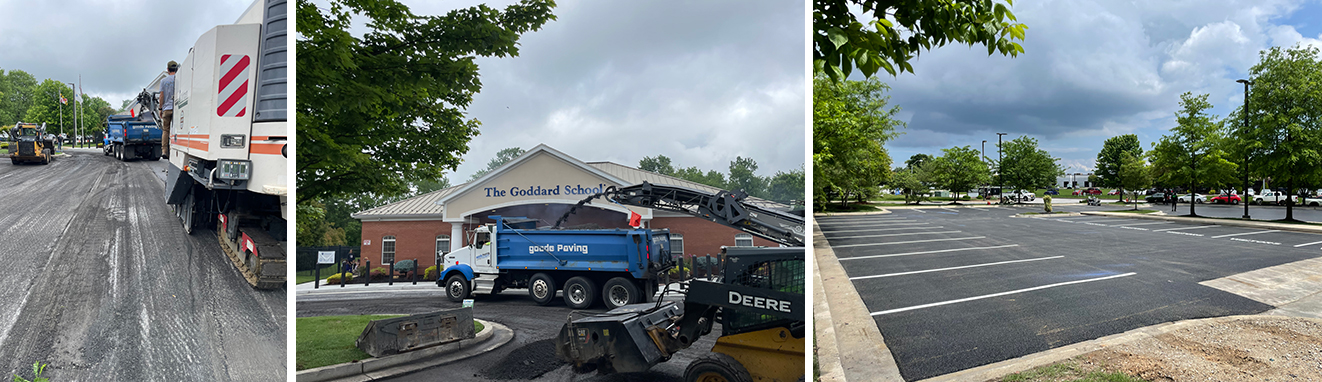
At The Goddard School on Mercantile Road in Baltimore, MD, the parking lot had begun to show signs of surface deterioration from years of daily use. Cracks, uneven textures, and fading made the area look worn and impacted both appearance and safety.
That’s when Goode Paving & Sealcoating stepped in to restore the surface with a 2-inch mill and overlay, followed by fresh line striping to give the lot a clean, finished look.
Our Pavement Restoration Without Full Replacement
Rather than tearing out the entire lot, our team used a more efficient and cost-effective approach—asphalt milling and overlay. This process removes the top layer of damaged asphalt while preserving the existing base, which was still structurally sound.
It’s an ideal solution for commercial properties like schools, where downtime must be minimized and budget efficiency matters.
Steps We Took to Deliver Lasting Results
Here’s how we tackled the job:
Milling
We used precision equipment to grind down 2 inches of worn asphalt across the parking lot. This removed surface defects like cracks and uneven patches without disturbing the base.
Sweeping and Surface Prep
After milling, we cleaned the entire area to prepare for bonding the new layer.
Asphalt Overlay
A fresh 2-inch layer of hot mix asphalt was applied and compacted, creating a smooth, durable surface.
Line Striping
To complete the job, we added clean, high-visibility striping for parking spaces and traffic flow. This step improves safety and gives the lot a finished, professional appearance.
The new markings are fully ADA compliant, providing accessible spaces and pathways meet federal requirements for inclusive use.
The transformation was immediately visible—from faded and cracked to a fresh, newly paved look. The new striping ensures safe drop-off and pickup zones for families and staff while clearly defining parking stalls throughout the lot.
A Smart Choice for Baltimore-Area Commercial Properties
In Baltimore’s busy commercial areas, parking lots face constant wear from traffic, changing weather, and environmental exposure. The mill and overlay method offers a smart alternative to full reconstruction, giving businesses a way to restore pavement performance without starting from scratch.
Schools like The Goddard School need reliable, smooth, and safe lots—especially during peak pickup times. This service not only improved curb appeal but also made day-to-day operations smoother and safer.
Need to Restore a Worn Lot Without Starting Over?
If your commercial property has surface wear, cracking, or fading—but the base is still solid—a mill and overlay can bring it back to life for a fraction of the cost and time of full replacement.
At Goode Paving & Sealcoating, we help businesses throughout Baltimore restore and protect their lots with expert paving and striping services. From schools and offices to retail and industrial sites, our proven approach gets results that last.
Call us today to schedule your pavement evaluation and find out if a mill and overlay is the right solution for your lot.
How to Get the Best Quote for Parking Lot Striping in Baltimore (7 Smart Tips)
Parking lot striping might seem like a small detail, but in a busy city like Baltimore—where foot traffic, vehicle congestion, and weather all take their toll—clear, professional striping can make a big difference in safety, appearance, and compliance.
Getting the best quote for your striping job is about more than just the lowest price whether you’re managing a lot near Inner Harbor, running a business off Reisterstown Road, or maintaining a church parking lot in Highlandtown. It’s all about value, quality, and long-term performance.
Let’s explore 7 smart and practical tips to help you get the best quote for parking lot striping in Baltimore.
Key Takeaways
- A parking lot quote gets more accurate when people measure the space and list specific striping needs upfront.
- Most people get better results by comparing two or three local quotes instead of juggling five confusing estimates.
- Some paints wear down fast in Baltimore’s weather so durable materials matter more than a rock-bottom price.
- ADA rules in Baltimore require exact striping measurements and skipping them can lead to fines or rework.
- A good contractor shows clear, lasting work at real Baltimore locations so people know what to expect.
1. Know the Size and Layout of Your Lot
Before contacting a contractor, measure your parking lot or have an estimate of its square footage. Count the number of spaces, handicap spots, loading zones, and directional arrows you’ll need.
Quality parking lot striping depends on accurate planning—because each element affects traffic flow, safety, and compliance.
For example, a lot serving a retail strip in Canton will likely have different striping needs than a school lot in Hampden.
The more detailed info you provide upfront, the more accurate the quote will be—and the less likely you are to get hit with surprise costs later.
2. Get Multiple Quotes—but Not Too Many
It’s smart to get quotes from at least two or three local contractors. This gives you a fair comparison of price and scope. But avoid going overboard with five or more—it can lead to confusion and decision fatigue.
Look for companies familiar with Baltimore’s weather patterns, like the freeze-thaw cycles in winter that wear down striping faster near waterfront areas such as Fells Point and Locust Point.
3. Ask About Paint Type and Durability
Not all striping materials are equal. Some contractors use quick-dry water-based paint, while others offer more durable thermoplastic or epoxy options.
In Baltimore’s humid summers and icy winters, quality paint matters. Make sure your contractor is using materials rated for local conditions, especially if your lot serves high-traffic areas like those near Morgan State University or The Avenue in Hampden.
4. Check for ADA and Local Code Compliance
Baltimore requires ADA-compliant striping for public lots and commercial properties. This includes proper signage, van-accessible spaces, and specified measurements.
A reputable contractor should be familiar with the city code and help you avoid fines or forced rework. This is especially important for medical clinics in Mount Vernon or city-owned buildings in downtown Baltimore.
5. Review Previous Work in the Area
Always ask for photos of recent jobs—or better yet, addresses of lots they’ve striped in your area. Drive by and check the quality for yourself.
A lot that was recently striped in Parkville or Pigtown should still look crisp and evenly spaced. If not, that’s a red flag about the contractor’s materials or process.
6. Ask What’s Included (and What’s Not)
A “cheap” quote might leave out key elements like layout design, cleanup, or repainting faded directional arrows. Confirm whether the quote includes:
- Layout planning
- Re-striping vs. new striping
- Curb painting
- Stenciling
- Numbering or lettering
Businesses along York Road or Washington Boulevard often need customized markings, so be sure you’re comparing apples to apples.
7. Consider Scheduling and Traffic Impact
In a city like Baltimore, timing is everything. Can the contractor complete the work during off-hours or on weekends to reduce disruption?
This is critical for high-traffic spots near Lexington Market or Harbor East.
Some contractors may charge more for night or weekend work, but it could save your business more in customer convenience and accessibility.
Bring It All Together Before You Call
Once you’ve measured your lot, listed your striping needs, reviewed a few reputable contractors, and checked for compliance details, use that information to request quotes with confidence.
Share clear specs, ask the right questions, and compare not just prices but also scope, materials, and scheduling flexibility.
That way, you’re not just shopping for the lowest number—you’re securing quality parking lot striping that will hold up in Baltimore’s demanding conditions.
Skip the Guesswork—Get Quality Parking Lot Striping at the Right Price
Managing a property in Baltimore is already demanding. Between city regulations and unpredictable weather, the last thing you need is a striping job that causes delays or doesn’t last.
At Goode Paving & Sealcoating, Inc., we deliver long-lasting, professional parking lot striping across Baltimore—from Federal Hill to Rosedale. Our team uses durable, climate-appropriate paints, ensures ADA compliance, and works around your schedule to minimize disruption.
Ready for a quote you can trust?
Contact us today for a free on-site assessment—we’ll walk your lot, explain your options, and provide a clear, competitive price.
What Are the Signs You Need Commercial Asphalt Maintenance in Baltimore County?
If you own or manage a commercial property in Baltimore County, you already know how important curb appeal and safety are for your business.
Whether you’re operating a shopping center off Liberty Road or a warehouse near the Patapsco Valley State Park area, the condition of your asphalt tells visitors, employees, and customers a lot about your standards.
But how do you know when it’s time to call in a professional for asphalt maintenance?
Let’s walk through the key signs your commercial asphalt in Baltimore County might be overdue for some expert care—and how staying on top of it can save you thousands down the line.
Key Takeaways
- Cracks that get worse over time are a big red flag for asphalt damage in Baltimore County’s freeze-thaw climate.
- Standing water after storms usually means the surface or base is uneven and needs attention fast.
- Faded striping and worn signs can create safety issues and signal it’s time for a sealcoat refresh.
- Loose gravel and crumbling edges often mean the asphalt binder is breaking down from the sun or traffic.
- If it’s been over three years since any maintenance, your asphalt probably needs inspection, even if it looks fine.
6 Signs You Need to Prioritize Asphalt Maintenance in Your Baltimore Property
Not all asphalt issues scream for attention, but the warning signs are often right under your tires. If you manage a commercial property in Baltimore County, it’s worth knowing the red flags that signal it’s time to act.
Let’s explore the six biggest signs your asphalt needs maintenance before it turns into a major expense.
1. Visible Cracks—Especially Ones That Are Growing
Even small cracks might not look like a big deal at first, but in areas like Baltimore County—where harsh freeze-thaw cycles are common in winter—they can quickly worsen.
Water seeps in, freezes, expands, and before you know it, a minor flaw turns into serious structural damage. This is especially common in older parking lots around Catonsville or commercial properties along Reisterstown Road.
If you’re seeing new cracks or noticing existing ones getting worse, it’s time to consider professional crack filling and/or crack sealing to stop the damage before it spreads.
2. Pooling Water After Rainstorms
After one of our classic Mid-Atlantic downpours, do you notice puddles sticking around on your lot longer than they should? That’s not just a drainage issue—it’s a warning sign.
Pooling water on asphalt in areas like Randallstown or Owings Mills often points to an uneven surface or failing subbase. This trapped moisture can break down asphalt over time, leading to potholes and other costly repairs. Proper grading and sealcoating can help prevent bigger problems.
3. Faded Striping and Signs of Wear
If your parking lot striping looks more like ghost lines than actual markings, it’s not just a cosmetic problem. In busy retail centers like those along Baltimore National Pike, unclear striping can lead to confusion, accidents, and even liability issues.
When you notice fading, cracking, or general wear in your traffic markings or signage, it’s a sign your surface needs maintenance—and a fresh coat of sealant.
4. Loose Gravel or Deteriorating Edges
In areas like White Marsh or Towson, it’s not unusual to find older commercial lots with loose aggregate along the edges or signs of surface raveling—where the asphalt starts to crumble and break apart.
This often points to the asphalt binder aging and deteriorating, usually due to sun exposure, heavy traffic, or simply a lack of regular upkeep. While this kind of wear tends to creep in slowly, seeing unexpected gravel is a clear sign it’s time to take action.
Addressing the issue early with proper patching can help prevent the need for more extensive—and expensive—structural repairs down the line.
5. Potholes—Big or Small
No one likes hitting a very unsafe pothole, whether it’s in a mall parking lot in Essex or outside an office building near Pikesville. Potholes aren’t just bad for vehicles—they’re signs that water has gotten beneath the surface and eroded the base layer.
Fixing potholes promptly is more than a courtesy to your visitors—it’s a crucial step in extending the life of your asphalt and avoiding liability claims.
6. It’s Been 3+ Years Since Your Last Service
Even if your asphalt looks fine, if it’s been more than three years since your last sealcoating or maintenance, it’s smart to get a professional inspection.
Here in Baltimore County, with our mix of hot, humid summers and icy winters, those seasonal extremes can wear down asphalt faster than you’d expect.
Routine maintenance—especially sealcoating every 3–5 years—protects your investment and keeps your lot looking sharp year-round.
Reminder: Don’t Wait Until the Damage Gets Worse
It’s easy to overlook asphalt maintenance when your lot is “working just fine”—until it isn’t. Once problems like potholes, drainage issues, or cracking take hold, they can spread quickly and become much more expensive to repair.
Keep Your Lot Safe and Looking Sharp
At Goode Paving, we help business owners all across Baltimore County keep their commercial lots in top shape—from strip malls in Dundalk to office parks in Woodlawn. Whether you need crack sealing, pothole repair, sealcoating, or full resurfacing, we’ve got the tools and experience to get the job done right.
Don’t wait for your asphalt to become a liability. Call us today to schedule a free inspection or request a quote. We’ll take a look, give you honest recommendations, and help you protect your investment for years to come.
Asphalt Driveway Paving in Woodbine, MD
 Goode Paving & Sealcoating Inc. recently completed an asphalt driveway paving project in Woodbine, MD, demonstrating how even winter conditions don’t stop us from delivering top-quality pavement. Despite the seasonal challenge of securing materials and working in colder temperatures, our team completed this residential paving project efficiently, providing the homeowner with a well-graded, smooth, and durable driveway.
Winter Asphalt Driveway Paving in Woodbine, MD: A Smooth and Durable Finish Despite Seasonal Challenges
This homeowner had previously worked with us on another residential paving project and was so impressed with our work that they contacted us again for their new residential driveway installation. The existing site needed proper grading to ensure drainage, a strong stone foundation, and a high-quality paved surface. Given the winter season, we had to act quickly to secure materials and complete the job before the cold weather became a barrier.
Tackling Winter Asphalt Driveway Paving Challenges
One of the biggest challenges for pavement contractors in winter is material availability, as many asphalt plants shut down for the season. However, at Goode Paving & Sealcoating Inc., we prioritize planning and efficiency. Our team swiftly scheduled the residential installation project, ensuring the necessary materials were sourced and delivered on time.
Once on-site, we:
- Graded the driveway area to promote proper water drainage and prevent future issues.
- Applied a strong stone base to create a stable foundation for the pavement.
- Installed a three-inch layer of asphalt with expert precision, ensuring a smooth and even surface.
Thanks to our team’s skill and coordination, we completed the asphalt driveway paving project efficiently without compromising on quality. The homeowner was thrilled with the final result, praising the smooth finish and our team’s professionalism. “The crew was incredibly efficient, and the finished driveway looks fantastic,” they shared. This customer reinforced our reputation for reliability and high-quality workmanship by trusting us again for their residential paving needs.
Why Winter Asphalt Driveway Paving is Possible with the Right Team
While many homeowners assume that all construction must wait until warmer months, Goode Paving & Sealcoating Inc. has the expertise to complete asphalt driveway paving year-round. Proper grading, a solid foundation, and expert installation ensure a long-lasting surface that withstands seasonal conditions. Our knowledge of material behavior in colder temperatures allows us to adapt our approach, ensuring the highest standards of durability and performance.
If you’re considering a new driveway, don’t wait! Call us today or visit our contact page to schedule your residential pavement service.


Bel Air, MD Parking Lot Upgrade with Asphalt Overlay
Parking lots endure heavy wear and tear, but complete replacement isn’t always the best solution. Goode Paving recently completed an impressive asphalt overlay project in Bel Air, Maryland, showcasing how this cost-effective and sustainable method can restore pavement to like-new condition while extending its lifespan. Read on to learn more about this innovative approach to pavement restoration and why local businesses and municipalities trust it.
What Is Asphalt Milling and Overlay?
Milling is removing the damaged surface layer while preserving the underlying base. This ensures structural integrity and prepares the surface for a fresh layer, AKA Asphalt Overlay. The overlay adds a durable, smooth layer that improves aesthetics and extends the pavement’s lifespan. These processes provide a seamless, long-lasting solution for worn-out paved surfaces.
Professional Asphalt Milling and Overlay Services by Goode Paving in Bel Air, MD

Recently, Goode Paving tackled a 300-ton asphalt overlay project for a building supply company in Bel Air, MD. The pavement had suffered from years of wear and heavy traffic. The project included a precise two-inch milling of the entire area, followed by sweeping, applying tack, and installing two inches of 12.5 mm asphalt. This new layer is the same as freshly installed pavement, offering an extended lifespan and a new surface at a fraction of the cost.
This meticulous process addressed all surface irregularities and restored the pavement to an attractive, highly durable condition. The team added crisp, professional line striping to complete the transformation, turning the newly paved area into a fully functional and well-organized parking lot. The results speak for themselves: enhanced pavement durability, improved commercial curb appeal, and a parking lot designed to withstand years of heavy use.
Why Choose Asphalt Overlay Over Full Replacement?
Asphalt overlay offers significant advantages over full replacement for commercial property owners in Bel Air, MD. This method saves on costs and reduces waste by reusing the existing base. It also allows for faster completion times, minimizing disruptions to daily operations. Additionally, the eco-friendly nature of recycling old pavement aligns with modern sustainability goals.
Call Goode Paving Today for Expert Asphalt Milling and Overlay Services in Bel Air, MD
Goode Paving has been a trusted name in the paving industry since 1989, and it is known for exceptional service and quality craftsmanship. If your property in Bel Air, MD, requires professional pavement restoration, asphalt overlay can be the perfect solution. Contact Goode Paving today to learn how their expertise can revitalize your parking lot and keep it in top condition for years!

default

Driveway Overlay and Drainage Correction in Bel Air, MD
Goode Paving, a trusted name in the paving industry, recently completed a successful driveway repair project for a residential homeowner in Bel Air, MD. Known for delivering high-quality paving solutions, our team specializes in services like driveway overlay and drainage repair, ensuring the longevity and functionality of paved surfaces.
Goode Paving’s Driveway Overlay and Drainage Correction in Bel Air, MD
 A neighbor referred the homeowner to Goode Paving after they’d complained about puddles on their pavement near the garage. The tight drainage posed a risk of water damage to the garage and the house. The client needed a reliable asphalt repair solution to correct drainage problems and revitalize their residential pavement.
Goode Paving’s expert team began by milling the existing paved surface. This process involved removing the top layer of asphalt to create a smooth and stable base for the overlay. The next crucial step was correcting the slope to ensure adequate drainage. Our team removed a large, problematic section of the pavement that was causing water to collect. Then, they carefully shaped the ground to form a gentle ditch or channel. This new ditch directs water away from the garage and house, helping to prevent any potential water damage.
Following the slope correction, the team proceeded with the driveway overlay. This step involved laying a new layer of asphalt over the milled surface. The result was a seamless finish that enhanced the asphalt’s appearance and durability. The homeowner was thrilled with the outcome, stating, “Great finish, clean lines.”
Do you have residential asphalt problems? Contact Goode Paving and discover the benefits of professional driveway overlay and drainage correction!
Investing in a professional driveway overlay and drainage correction offers numerous benefits to property owners. Firstly, it extends pavement lifespan by preventing water accumulation and potential damage. Proper drainage ensures water flows away from the pavement, reducing the risk of cracks and potholes. Additionally, a smooth, well-maintained driveway enhances the property’s curb appeal, adding value to the home.
The Goode team provides reliable and professional solutions for Bel Air, MD, property owners considering a driveway overlay or dealing with drainage issues. Don’t let drainage problems compromise the integrity of your asphalt surfaces.
Contact Goode Paving today to schedule a consultation and ensure your pavement remains in top condition, whether that’s a residential driveway or a commercial parking lot!
Parking Lot Repair Saves Baltimore, MD Condos
Goode Paving recently undertook a significant parking lot repair project for a condo property management team in Baltimore, MD. Known for its exceptional paving solutions, Goode Paving offers a range of services designed to restore and enhance asphalt surfaces, including commercial asphalt repair and line striping.
Goode Paving’s Expert Parking Lot Repair and Line Striping in Baltimore, MD
 The client contacted Goode Paving because their asphalt parking lot was in poor condition–plagued with potholes and significant cracking. Recognizing the need for professional intervention, they sought Goode Paving’s expertise to ensure a durable and visually appealing solution.
Our commercial paving team started with a 2-inch mill and overlay process. Milling involved removing the top 2 inches of the damaged asphalt to create a smooth base for the new layer. This step is crucial for ensuring the longevity of the repair by eliminating existing cracks and imperfections. Once the milling was complete, a fresh asphalt layer was applied, providing a smooth and durable surface.
Following the overlay, the team performed line striping services. Proper line striping is essential for any parking lot as it ensures clear, visible markings for parking spaces, enhancing safety and organization. The newly painted lines provided a crisp, clean look, significantly improving the residential property’s appearance to please current and draw in more potential tenants. The Baltimore property management team was delighted with the results, commenting, “Quick and efficient from estimate to execution. Quality results for a good value.”
Want to revitalize your commercial asphalt in Baltimore, MD? Contact Goode Paving for professional parking lot repair and line striping!
Investing in professional commercial asphalt repair and line striping offers numerous benefits to commercial property owners. A smooth, well-maintained paved surface prevents vehicle damage, and the risk of pedestrian falls. Proper line striping enhances the visual appeal and improves traffic flow and safety by indicating parking spaces and directional guides.
We proudly provide reliable and efficient solutions to Baltimore area property owners and managers dealing with worn-out asphalt. Don’t let a deteriorating parking lot detract from your property’s appeal and functionality.
Contact Goode Paving today to schedule a consultation and experience top-quality parking lot repair and line striping services!
Middle River, MD Commercial Asphalt Roadway Project
At Goode Paving, we pride ourselves on delivering high-quality commercial asphalt solutions throughout Northern Maryland since 1989. Founded by Denny Goode, our company is known for its integrity, reliability, and exceptional craftsmanship. Recently, we had the opportunity to assist a returning client in Middle River, MD, who needed a new roadway for their commercial property.
Goode Paving: Expert Commercial Asphalt Installation in Middle River, MD
 The property owner, familiar with our superior quality from previous projects, contacted us to install a private roadway. The project presented unique challenges due to the existing piping and structures on the site. Additionally, the client needed the project completed on a strict timeline to meet Baltimore County inspectors’ demands.
Our team began by conducting a detailed assessment of the site, identifying the best approach to navigate around the existing piping and structures without compromising the integrity of the new roadway. We are experts in delivering clean and precise hand-worked projects. This skill was essential for working around the existing structures and ensuring a seamless finish. Understanding the importance of meeting deadlines, we meticulously planned and executed the project to align with the client’s schedule. Our promptness ensured that the paving was completed on time, meeting the demands of the Baltimore County inspectors.
The commercial asphalt paving process involves two critical layers. First, the base installation (19mm) was applied to provide the foundational support for the roadway. Using high-quality materials, we ensured a solid and stable base. Next, the asphalt layer (12.5mm) was applied, creating a smooth, durable surface capable of withstanding heavy commercial use.
The client was satisfied with the project’s outcome and praised our team’s professionalism and efficiency. As the property owner quoted, “Goode Paving made scheduling easy, delivered a clean finish, and completed the work quickly. Their attention to detail and commitment to quality are unmatched.”
Are you thinking about new asphalt for your commercial property? Want to upgrade your parking lot? Stop gravel damage to company vehicles? Contact us today!
For commercial property owners, a well-paved roadway enhances the property’s functionality and aesthetic appeal. Properly installed asphalt can handle high traffic volumes and is resistant to wear and tear, ensuring longevity and reducing maintenance costs.
This successful project in Middle River, MD, underscores Goode Paving’s expertise in commercial asphalt. Our ability to navigate complex site conditions and adhere to tight schedules makes us the preferred choice for commercial asphalt projects. If you are a Middle River, MD, property owner looking for reliable commercial installation, repair, and maintenance services, contact Goode Paving today.
Our experienced team is ready to deliver the best pavement solutions tailored to your needs. Call us now to schedule a consultation and see how we can enhance your property with our professional commercial asphalt paving services.


Roadway Paving Improves Perryville, MD Property
A property owner in Perryville, MD, needed a durable and reliable roadway on their rural property. The existing path was inadequate, causing inconvenience and potential damage to vehicles. Who can they trust for asphalt installation in Northern Maryland? With over 30 years of experience, Goode Paving has earned a reputation as the most reliable source of exceptional paving services.
They contacted Goode Paving to install a new asphalt roadway, seeking a long-lasting solution superior to chip seal. This asphalt installation project exemplifies our expertise and dedication to quality.
Goode Paving: Installing Beautiful Private Roadways in MD Communities Like Perryville
 Goode Paving approached the project with their usual thoroughness and professionalism. The process began with assessing the site to ensure the best approach for the new roadway. The team then prepared the area by clearing debris and ensuring the ground was stable. Our asphalt installation team installed a strong base layer using high-quality stone aggregates. This layer is vital as it provides stability and supports the paved surface. Ensuring a solid foundation prevents future issues such as cracks and potholes. Our team also carefully graded the base layer to ensure optimal water runoff, preventing water accumulation that can damage the road over time.
Once the base was prepared, we moved on to the asphalt installation. We used a hot mix known for its durability and ability to withstand various weather conditions. The asphalt was laid and compacted to create a smooth, even surface.
Ready to improve your MD property with superior asphalt installation? Contact us today!
Asphalt is an excellent choice for rural roadways, offering several advantages over chip seal. It provides a smoother and more durable surface, reducing the risk of vehicle damage and requiring less maintenance. It also enhances the property’s curb appeal, increasing its value.
Goode Paving’s asphalt installation in Perryville, MD, is a testament to their dedication to quality and customer satisfaction. If you’re a property owner in Northern Maryland and need professional paving services, consider Goode Paving for your next project.
Contact us today to learn more about our services and how we can help improve your property with a new asphalt roadway!


Asphalt Paving Better Than Gravel for White Hall, MD Property
Since 1989, Goode Paving has been Northern Maryland’s trusted name in both residential and commercial paving. Founded by Denny Goode, our company prides itself on delivering reliable, high-quality paving services rooted in integrity and honesty. Recently, we had the pleasure of assisting a property owner in White Hall, MD, who faced significant challenges with their gravel-paved areas.
The client was experiencing severe drainage issues on their property, leading to erosion and damage in their parking areas and roadway. The gravel surface was not providing adequate stability or longevity, making it necessary to upgrade to asphalt paving substantially. They turned to Goode for our expertise in handling such transformations.
Goode Paving: Transforming White Hall, MD Properties with Exceptional Asphalt

Our team began by conducting a comprehensive site assessment to identify the best approach for addressing the existing issues. We aimed to improve the surface and the underlying drainage systems to ensure a long-lasting, durable solution.
Our Asphalt Paving Process
- Drainage Repair: The first step involved addressing the drainage problems. We created a tight grade to the existing drain, ensuring effective water runoff and preventing future erosion issues.
- Base Layer Preparation: A strong foundation is essential for any asphalt surface. We installed a gravel aggregate base and remediated a 50’x12′ section of the compromised subgrade, stabilizing the ground to support the new pavement.
- Grading for Drainage: Proper grading is crucial for the health of any pavement. We meticulously graded the area to ensure optimal water runoff, preventing future damage from standing water.
- Asphalt Paving: With the base layer prepared and the grading complete, we proceeded with the installation, including over the repaired base layer to create a smooth, even surface.
- Curb Installation: We installed extruded asphalt curbs to further enhance runoff control. These curbs direct water flow away from the pavement, reducing the risk of erosion and maintaining the integrity of the surface.
Grading and drainage are critical components of any successful paving project. Proper grading ensures that water is directed away from the pavement, reducing the risk of damage and extending the surface’s lifespan. Adequate drainage prevents standing water, which can lead to cracks, potholes, and other forms of deterioration.
The transformation of the White Hall, MD, property from gravel to asphalt significantly improved its functionality and appearance. The new paved surface and the enhanced drainage system provide a durable, long-lasting solution that meets the client’s needs.
For White Hall, MD, property owners considering asphalt paving or drainage repair, contact Goode Paving today!
Our team of experienced professionals is ready to provide the best asphalt solutions tailored to your specific requirements. Call us now to schedule a consultation and enhance your property with our expert paving services!

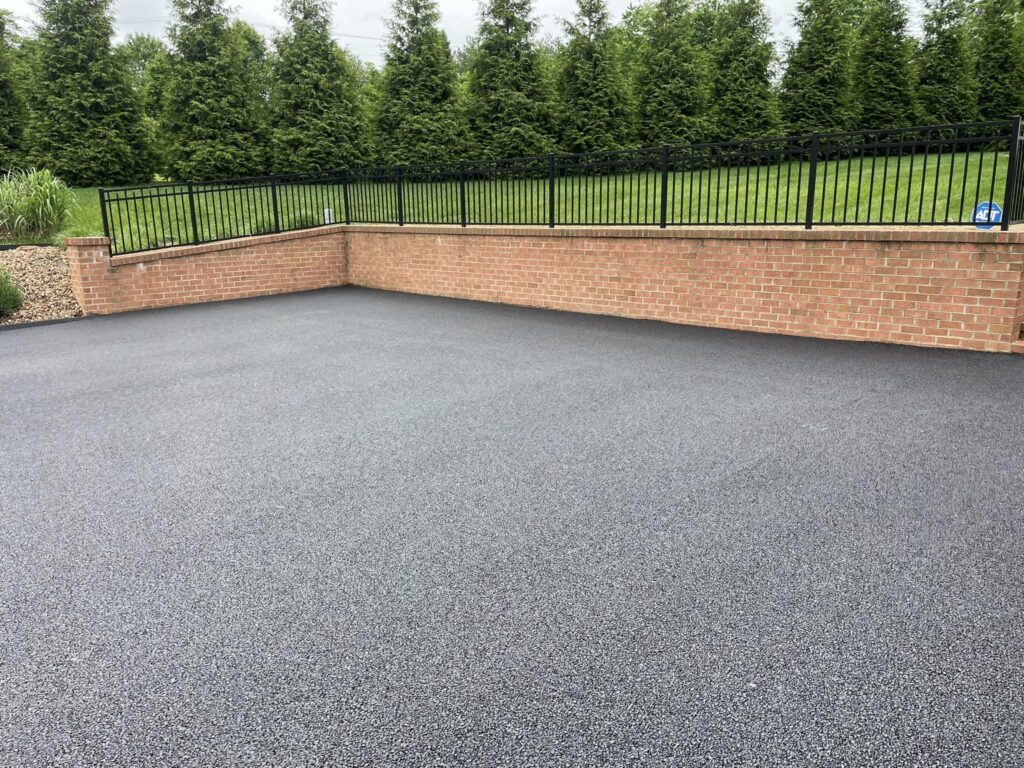
Asphalt Driveway Paving Improves Fallston, MD Property
Goode Paving, renowned for its high-quality asphalt driveway paving services, recently tackled a significant project for a residential property owner near Fallston, MD. The client, referred to Goode by a neighbor, faced persistent issues with their gravel drive. Due to poor drainage, the driveway was breaking down and getting muddy, making it difficult to navigate and creating unsightly and hazardous conditions on the rural property.
Expert Grading & Residential Asphalt Installation by Goode Paving in Fallston, MD
Upon initial assessment, the team noted that the property wasn’t graded properly, contributing to water accumulation and mud. Proper drainage is crucial for pavement longevity, as standing water can weaken the surface and lead to cracks and potholes. Understanding this, our asphalt experts devised a comprehensive plan to transform their residential property with new pavement.
The project commenced with grading the area to ensure appropriate drainage. This step is vital to direct water away from the surface and prevent future erosion. Once the grading was completed, the team installed a 3-inch layer of high-quality asphalt. This depth is ideal for residential pavement, offering durability and a smooth finish.
The asphalt driveway paving process didn’t end with laying the pavement. Our skilled contractors paid particular attention to the edges, ensuring they were treated and smoothed to prevent water seepage that could undermine the structure. The result was a robust, aesthetically pleasing driveway with clearly defined edges.
The client was delighted: “The quality finish, improved water flow, and straight edges exceeded our expectations. The Goode team delivered on all fronts.” Such positive feedback underscores the company’s commitment to excellence in residential pavement projects.
Contact Goode Paving Today for Premium Asphalt Driveway Paving in Fallston, MD, and Beyond!
For Maryland property owners, this project highlights the benefits of asphalt driveway paving. Not only does asphalt enhance the home’s curb appeal, but it also provides a durable surface that can withstand various weather conditions. Proper drainage ensures the pavement remains in top condition for years, reducing maintenance costs and prolonging pavement lifespan.
If you’re a property owner in Fallston, MD, dealing with similar issues, consider the advantages of professional asphalt driveway paving. Our team’s expertise ensures a reliable, high-quality solution tailored to your needs. Contact us today to schedule a consultation and transform your driveway into a durable, attractive asset for your residential property.


Don’t let drainage issues and deteriorating surfaces compromise your property’s value. Reach out to Goode Paving and experience top-tier residential asphalt services!
Asphalt Paving in 2023 – What You Should Know
Choosing Asphalt Paving For Your Project?
Asphalt continues to be the go-to pavement of choice in roads, driveways, and even walkways. Homeowners are choosing asphalt paving for their own driveways due to the affordability and longevity of this particular paving type. Here are a few reasons why:
Durability
Asphalt is a durable surface that is ideal for use in busy areas such as shopping center parking lots and for residential driveways. When properly maintained asphalt pavement can last up to 20 years which means homeowners and business owners can be assured their money is well invested.
Safety
Asphalt is designed so that water disperses quickly and properly. Proper drainage of water is very important near residential homes and commercial buildings. This means that the pooling of water can be addressed and protect against flooding area building and protects drivers from hydroplaning on roads, parking lots, and driveways.
Repair
Many property owners have turned to asphalt as a paving option due to the ease of repair. When damage to the asphalt surface occurs, a trusted asphalt paving company can readily and affordably repair it. The work can be completed quickly and typically will not require expensive tools or materials.
Smooth Surface
Asphalt provides a smoother surface than concrete and other pavement materials. The surface, along with the durability, safety, and ease of repair are all reasons that most municipalities, states, and federal transportation departments use asphalt on roads and highways.
Porous asphalt is another trend that continues to grow in popularity. Porous asphalt prevents water from pooling on the surface of the asphalt by allowing more of it to drain safely. This reduces noise, splash, and spray, and also improves the overall management of stormwater. It can reduce water damage from water pooling on the surface of the asphalt as well.
Asphalt Trends
Asphalt paving projects that add unique character to the space are going to continue to be popular in the coming years. Asphalt provides improved function and will continue to grow in popularity.
Snow Removal – Hire Your Contractor Before the First Snow
Snow Removal – what to know
Winter is coming. If you run a commercial business or have a property, like a church or shopping center, where people come frequently, you have a responsibility to ensure that the snow is properly removed from your parking lots and sidewalks. Unless you have the time to do it yourself, you’re probably going to hire this job out. However, if you are like most business owners, you may not think about it until the first big snowstorm. This is a mistake. If you want the best rates and the best service, hire your commercial snow removal contractor before the first big snow. Here are some benefits you will enjoy if you do.
Get the Best Quality Contractor
Snow removal becomes a sudden priority when the first big snow is anticipated. Early in the season, it’s less of a priority. Snow removal becomes a sudden priority when the first big snow is anticipated. If you want the best possible contractor, you need to make the decision to contract early.
Better Negotiation Ability
Snow removal may be a negotiable service, depending on the company you are choosing. However, when there’s a foot of snow in the forecast or, even worse, on the ground, you aren’t going to have much negotiation power. Choosing your contractor in the late summer or early fall, is your best option
Peace of Mind
What happens when the first snow hits and you don’t have a contractor on call? You’re forced to spend hours on the phone finding someone who is available, or you must do the job yourself. Contracting with your snow removal team early gives you peace of mind knowing that this important task will be covered for you.
Prepared for Early Storms
Can you predict when the first snow will hit? If you could, then you are in the wrong profession! If the first snow storm hits in the fall, instead of in the winter, negotiating for your snow removal early will ensure that you are prepared.
Better Rates
Commercial snow removal is a supply and demand type business. When the demand is high, the price might go up. By choosing your snow removal contractor early, you can lock in the most advantageous rate.
Winter is coming, and with it typically comes snow and ice. Make sure your business is properly prepared with the help of a commercial snow removal contractor. Book yours early, and you won’t have anything to worry about when the weather forecaster is predicting a big storm.
Maintaining Asphalt Driveways During Winter
Maintaining asphalt driveways during winter is important. When winter hits, your asphalt driveway is at risk for damage due to the cold weather and freezing precipitation. You can do several things to help protect your driveway from damage during this season. From taking care of cracks to moving snow in a timely manner, these are the steps to take to protect your driveway throughout the winter season.
1. Repair Cracks Promptly
Cracks in an asphalt driveway are problematic because they allow water to seep into the crack. It will then freeze and expand, causing further damage to the structure of the asphalt. Repair any cracks that you notice as quickly a possible to avoid these problems.
2. Avoid Rock Salt
While you want to get rid of ice on your driveway, avoid turning to rock salt. Rock salt can damage your driveway. Because asphalt is porous, salt and water can penetrate beneath it. Rock salt has a melt limit of 25 degrees, and many winter days are far colder than this. Thus, the rock salt will trigger a cycle of thawing then freezing.
This freeze-thaw cycle complete with water seeping into the asphalt damages the material. This creates uneven surfaces, fading, and potholes. Calcium chloride is a better deicer that creates fewer freeze-thaw cycles because it continues working to temperatures of 25 degrees below zero.
3. Use Gutters Well
Make sure your gutters point away from your driveway. When show and ice on your roof melt, it will flow off of your home through the gutters. Diverting this water away from the driveway will prevent it from re-freezing as the temperatures drop.
4. Remove Snow Promptly
After a snow, remove it from the driveway as promptly as you can. Letting snow sit on the driveway increases the risk of the freeze-thaw cycle and the damage it can create. When removing snow, use a plastic shovel, not a metal one, as metal can damage the asphalt. Taking good care of your driveway in the winter is vital. This is the season when most damage is going to occur because of the way water expands when wet. By focusing your efforts on keeping it well-maintained to prevent damage from freezing and thawing water, you will be protecting your investment all season long
ADA Accessible Parking. What are the Requirements?
ADA accessible parking. The Americans with Disabilities Act sets specific requirements in place for all types of businesses to be handicapped accessible. Those rules apply to all aspects of the business, including its parking garages and parking lots. Businesses in Maryland must provide their customers and employees with ADA-compliant parking lots in order to open their doors to the public, and Maryland’s Public Safety Code places strict penalties on those that do not.
So What are the ADA Requirements for Accessible Parking Lots?
Have the Right Number of Handicapped Spaces
First, the parking lot must have the right number of handicapped-accessible spaces. This is based on the number of total spaces in the lot. For every 25 spaces in the lot up to 100, the business must have one accessible space. After 100, the ratio drops. At 1,000 r more spaces, the lot must have 20 spaces plus one additional space per 100 after 1,000. All parking lots must have at least one van-accessible parking space.
Design the Spaces Truly Accessible
To be considered accessible, the space must have the right signage, pavement markings, and dimensions. It also must have minimal pavement slope. These spaces must be at least 8 feet wide with an aisle next to the space that is also 5 feet wide. For van-accessible spaces, the aisle must be 8 feet wide.
Mark the Space Clearly
The space must have a blue handicapped parking sign with a notice of the potential fine. This sign can be on a pole that is 7 feet high or on the side of the building at a height between 6 and 10 feet. This fine is specific to the Maryland county where the property is located.
On the pavement, the disability symbol should be visible within the parking space. The ADA requires the aisle to have markings that indicate they are not to be used for parking.
Citations for Non-Compliance of ADA Accessible Parking
Because having ADA-compliant parking lots is required by law, Maryland’s Public Safety Code allows for a fine of up to $500 and imprisonment of up to 3 months for violating the law. Most businesses are given a warning and a chance to comply, but refusal to comply leads to strict penalties. Violating the Public Safety Code is considered a misdemeanor.
Making your parking lot ADA compliant is not difficult, but you do need to know the rules. By following them, you can ensure that everyone who visits your facility has a safe and accessible place to park, while also protecting yourself from stiff penalties.
Sources
https://www.montgomerycountymd.gov/DGS-ADA/Resources/Files/accessible_parking.pdf
https://codes.findlaw.com/md/public-safety/md-code-public-safety-sect-12-202.html
How Long Should Your Paved Parking Lot Last
One of the benefits of an asphalt paved parking lot is its easy maintenance and long lifespan. If you are considering a new paving option for your parking lot, this is definitely part of the consideration. here’s everything you need to know about the lifespan of asphalt and what you can do to keep your parking lot in good repair as long as possible.
What Is the Lifespan of an Asphalt Paved Parking Lot
If the parking lot is properly installed and paved, you can expect it to last between 20 and 30 years. This is a long-lasting product, but it does require proper care and maintenance to reach this expected lifespan.
Factors that Affect Asphalt’s Lifespan
Several factors can affect the lifespan of your asphalt parking lot. These include:
- Quality of the installation
- Traffic patterns
- Maintenance and repair as needed
- Climate and weather
If you want to get the full 30 years out of your parking lot, make sure you take care of problems when they develop quickly and practice proper asphalt maintenance.
How to Maintain Your Asphalt
If you want to get the longest lifespan possible out of your parking lot, first you need to ensure that the initial installation is of high quality. Poorly installed asphalt will not last because the foundation will not provide the right stability. Then, make sure you sealcoat the parking lot on a regular basis. Sealcoating adds a topcoat that protects against holes, weather, and other damage. Sealcoating the pavement every two to three years increases the lifespan significantly.
If your asphalt starts to show signs of wear, consider an overlay instead of sealcoating. This can help you postpone full replacement. If you notice problems like cracks or bowing, have it repaired as quickly as possible.
Finally, keep the asphalt clean. Debris allows water to pool on the surface, and that is damaging to the asphalt. Keep it clean to extend its lifespan.
Asphalt is a durable material that can last for several decades with the right care and maintenance. Make a commitment to take care of your asphalt so you can enjoy excellent functionality for many years to come.
How to Know when it is time to Repave Your Parking Lot
Your parking lot is vital to the success of your business, so how can you tell when it’s time to replace it? Waiting too long can cause liability issues as pot holes and tripping hazards develop. While big problems like potholes are obvious, some problems are less obvious. Here are some signs to watch for that indicate it’s time for a new parking lot.
1. Visible Cracks or Potholes
If you can see cracks in the asphalt, then it’s time to start thinking about replacement. Not only do they hurt the look of your parking lot, but they also get worse with time. The longer you leave them exposed to the elements, the more damage those cracks can do to the structure of your parking lot.
Once your parking lot starts to develop potholes, it’s time to repave the entire lot. Potholes are a sign of serious structural problems with the parking lot. They are difficult to repair and will get bigger if left unattended.
2. Damage, Fading, and Denting
Asphalt has a tendency to fade with time. UV rays lighten and discolor the parking lot. This can hurt the look and also integrity of the asphalt.
Dent and divots in the asphalt happen when heavy vehicles come into the parking lot on a regular basis or are parked in the parking lot in the same place regularly. Damage from trailers or tow trucks can cause divots and dents as well. Replacing your parking lot, and making it stronger to withstand your normal traffic, is important when you notice these problems.
3. Improper Thickness
The thickness of a parking lot’s asphalt will have a significant impact on its durability. If yours seems to damage easily or is not holding up well under your regular traffic, it may be too thin for your particular needs.
4. Water Retention
If your parking lot has areas that pool water after a rain, it means the parking lot is not properly sloped for water runoff. That water is going to cause damage, especially in winter when it can freeze and expand, adding more cracks to the asphalt.
Spotting signs of problems with your parking lot before they develop into large cracks or potholes will help you be proactive against problems. Watch for these signs, and make plans to replace the parking lot as soon as it is needed.
Choosing a Paving Contractor in Baltimore
Investing in a new asphalt parking lot or driveway is a sizable investment. You want to be confident that you’ve chosen the right contractor. While the price is important, don’t choose based on price alone, because you want the job done right. Here are several factors to consider when selecting a Baltimore asphalt contractor.
1. What Materials Do They Use?
Ask your asphalt paving contractor about the materials they use. Make sure you chose a contractor that uses or offers high-grade asphalt so your finished driveway or parking lot is of good quality.
2. How Experienced is The Paving Contractor?
Experience matters in asphalt. Look for a team that has been in business for a while. They will be able to give you solid advice and quality craftsmanship for your project.
3. Do They Offer a Detailed Scope of Work?
The scope of work document tells you what the contractor is offering with their quote. You will be able to compare bids from each contractor more accurately with clear scope of work documents.
4. Does the Company Have Adequate Insurance Coverage?
Sometimes contractors that offer low prices are able to do so because they cut corners, and one of the corners is often insurance. They may be relying on your homeowner’s or business insurance to cover any accident that occurs. You don’t want to work with a contractor that lacks coverage, so ask upfront about insurance. If you have to turn in an accident to your own policy, your premiums could go up and you may have to cover deductibles.
5. Will Warranty Coverage Do They Offer?
Ask about the warranties that come along with your paving project. Ask what is covered and how long does the coverage last.
When shopping for an asphalt company in Baltimore, make sure you choose carefully. By asking these questions, you can confidently hire a quality company for your next asphalt project.
Contact us for an estimate.
Five Benefits of an Asphalt Parking Lot or Driveway
If a new driveway or parking lot is in your future, you need to start the process by choosing the right material. In America, 94% of roads are paved with asphalt, and for good reason. Asphalt has many proven benefits over other driveway and parking lot materials. Here are some reasons why it is a good choice.
1. Asphalt is Safer
Asphalt is a safer option than many paving choices. It has a high skid resistance, giving drivers and pedestrians better traction even in wet and snowy conditions. Also, the dark color of asphalt provides a high level of contrast to make striping and other markings more visible in parking lots. When it does snow, the dark color of the asphalt absorbs heat energy from the sun, allowing the ice and snow to melt more quickly than with lighter pavement options.
2. Asphalt is a Quieter Paving Option
When you pave your driveway or parking lot with asphalt, you’ll notice that it’s a quieter option. On the highway, asphalt reduces highway noise by as much as seven decibels. While the change at your home or business may not be this significant, it is still a much quieter option than other choices.
3. Asphalt Helps You Save Money
Asphalt goes in quicker and often at a lower price than many other pavement options. It is a soother service, causing less wear and tear on the vehicles that use your property. It also can last for up to 30 years with proper maintenance, giving you a long-lasting paving option.
4. Asphalt Protects The Environment
Asphalt is a fully recyclable material. In fact, it is the most recycled product in the country. Items like used tires or shingles can be put into the asphalt mix, helping reduce waste in landfills. It requires much less energy to produce than other paving materials. If you are looking for a paving product that helps you “go green” just a little bit more, asphalt is the one you want.
5. Asphalt Handles Weather Well
Finally, asphalt handles the demands of local weather well. As a flexible material, it expands and contracts with changing temperatures, with far less risk of cracking or buckling.
With all of these benefits, asphalt is clearly the best choice for your driveway or parking lot. Schedule a quote today to learn more about how you can enjoy these benefits for yourself.
Repair and Patch or Replace Your Asphalt Parking Lot
One of the biggest benefits of having an asphalt parking lot is the ease of repair for this common paving choice. As long as you keep up with repair when it’s needed, you can quickly and easily get your parking lot back into good working order when cracks or holes develop. In some instances, repair and patch is sufficient to keep your asphalt looking and functioning well. However, there are times when you’ll need to completely replace the parking lot. Here’s a closer look at what to consider when choosing to patch or replace your asphalt parking lot.
Repair and Patch
If you need to repair your parking lot with a tight budget, patching may be right for you. Small cracks and holes can be repaired and patched easily, and for those that are less than a quarter-of-an-inch wide, you may even be able to use nothing more than a liquid fill.
For deeper and wider cracks, you can still enjoy the benefits and affordability of patching. In these instances, the top layers of asphalt will be removed, allowing the contractor to repair and clean the damaged area before pouring new asphalt on top, compacting it and leveling it.
Patching and Repair is a consideration in certain circumstances.
When Is Replacement Necessary?
Sometimes, replacement is necessary in order to fully restore a parking lot. This typically is the case when the parking lot hasn’t been maintained or minor damage was allowed to expand. Large holes and cracks that cover the majority of the parking lot’s surface simply cannot be repaired and patched. In these cases, you will need to replace the asphalt completely. Also, if the parking lot is over 20 years old, it’s time to start thinking about replacing it. Complete replacement provides an end result of parking lot that will give you another couple of decades of good use.
A good paving contractor will help you make the right choice when considering to repair and patch or replace your asphalt parking lot.
Asphalt Paving – Residential or Commercial – It’s America’s Choice
As you drive around the country, if you pay attention to the driveways you see, you’re going to notice that asphalt is growing in popularity. For most applications, both residential and commercial, asphalt paving is the paving option more commonly used, particularly for parking lots and driveways, but also for many roads. Why is this? Why is asphalt paving residential or commercial becoming so widely used? Here are five reasons why this paving option is America’s pavement of choice.
Durability
Asphalt is quite durable, which is why so many commercial properties choose this paving option. While it will need some minor maintenance to look and function at its best, it’s not prone to the cracking common with concrete. It’s also rare to see large chunks break off of an asphalt driveway as you might see with concrete. It can easily handle the wear and tear that comes from parking vehicles regularly as well.
Aesthetics
Asphalt is much more attractive than other paving options. All it takes is regular sealcoatingto keep it looking an attractive dark black. Decorative options, like stamping and painting, can give it an artistic look when desired, without sacrificing the durability of the material. The dark color of asphalt helps the striping show up well on roads and parking lots.
Easy Maintenance
No paving option is free from potential problems, but with Asphalt, those problems are easy to handle. Surface damage is easy to repair with the help of an asphalt paving company, and the process is fairly affordable and quick. This is particularly valuable for commercial properties because having your driveway out of commission for long periods of time can greatly impact the function and profitability of a business.
Affordability
While the word “pavement” and “affordable” don’t seem to go together, the truth is that asphalt can be quite cost-effective in comparison to other paving options. The raw materials used to make up asphalt are easy to acquire, and therefore the overall cost of the pavement is low compared to other options. Because it doesn’t have to be constantly re-applied, it’s more affordable to maintain as well. Over the lifetime of a paved surface, its owners can save significantly.
Safety
Asphalt is a smoother surface than concrete or other surfaces. While this may seem like a small thing, in areas where people may be prone to trip and fall, such as retail parking lots, a smooth surface can make the area safer. If someone does fall, they are less likely to have serious damage as a result.
As you can see, there are many benefits to choosing asphalt for commercial or residential use. In fact, a close look at this list leaves you confident in why asphalt is so popular with American property owners. If you are in need of a new driveway or parking lot, consider asphalt.
Top 6 Benefits of Asphalt Parking Lots
Do you need a new parking lot for your office, store or another facility? Parking lots take quite a beating, so finding the right material is going to be critical. The two main paving choices, asphalt, and concrete, both have benefits and drawbacks. Here are six benefits of asphalt parking lots that you will want to consider as you make your choice.
It’s a “Green” Paving Option
You may be surprised to learn this, but asphalt is considered a “green” paving material. Hot mix asphalt is completely recyclable, and each year around 80 million tons are recycled in the United States alone. Choosing asphalt for your parking lot limits the impact on the environment as fewer “fresh” materials are required. If your company is looking for more ways to “go green,” choosing asphalt for your parking lot is a great option.
Quicker Installation
If you’re weighing the pros and cons of asphalt versus concrete, the installation time may be a deciding factor. One of the benefits of asphalt parking lots is that it can be installed in just a few days. Also, if the weather is cooperative, you can use it in just two days vs. the week It takes concrete to be fully ready to use.
Cheaper to Install
Because it can be made from recycled material and is easier and faster to install, Asphalt is easier on your wallet than concrete. This makes it the go-to choice for many who need to maximize their budgets. If you need an attractive parking lot but have a small budget, asphalt is going to be the parking lot of choice.
Long Lifespan
If you take good care of your asphalt parking lot, you can expect over two decades of good use. Partnering with an asphalt installation and repair company to ensure your regular maintenance is completed will help you get the longest possible lifespan out of your asphalt parking lot.
Easier Replacement
If the asphalt is well maintained, replacement is easier. Instead of having to replace the entire parking lot, you may be able to simply repave the top layer. This is more affordable and less time-intensive than completely tearing up and re-paving the parking lot from the bottom up.
Improved Water Drainage
No one wants to walk through puddles on their way to your facility from their car. Semi-permeable asphalt mixes can help improve water drainage by allowing water to pass through the asphalt into the soil below. This can make it a better choice for parking lots, as it will improve the overall function of the space and your enjoyment of it.
The benefits of asphalt parking lots are excellent. If your facility is in need of a new parking lot, asphalt is a wise and durable choice. Find a qualified asphalt contractor in your area to help you get started.
Asphalt vs. Concrete Which should you choose?
 When you’re putting in or replacing a driveway, the first consideration you’ll have to make is whether you need an asphalt or a concrete driveway. These are the two main choices, and both provide an attractive finish. Here’s what you need to know about the two.
Asphalt Is Less Expensive Than Concrete
First, asphalt is a less expensive option to install. It provides an attractive a uniform finish, just like concrete, but at a fraction of the price. This is particularly valuable for large driveways where the cost of concrete is prohibitive. When it comes to your home, saving money is always a good thing.
Asphalt Is Easier to Maintain
Both materials will crack, especially in climates where it freezes and thaws throughout the winter, which is common in Maryland. However, asphalt is easier to maintain when it does crack. Simply filling the cracks and adding a coat of sealant makes the driveway look almost as good as new! Additionally, blacktop is a dark color, which means that it’s less likely to stain and drips from your car no longer will mean your driveway is ruined.
Maintenance for asphalt driveways requires sealing every 3 to 5 years. This is not a difficult process, and once it’s done the look of the driveway is restored. Concrete driveways don’t require sealing, but staining is a serious problem that requires quite a bit of elbow grease to eliminate. When concrete cracks, it’s much harder to repair and it’s also quite a bit more obvious due to the effects of weathering.
Both Provide Longevity and Durability
One of the reasons many homeowners choose concrete over asphalt is because they believe the concrete is a more durable option. This is a myth, when installed properly, blacktop is one of the most durable driveway options.
As a testament to the durability of asphalt consider that it is the option of choice for most commercial properties! It’s pliable and flexible nature means it can withstand the normal settling of the ground that would crack other surfaces. Typically a blacktop driveway can last 30 years or more, as long as it is well maintained.
Both concrete and asphalt are great options for your driveway, but if you want the best bang for your buck, then you will want to consider asphalt. For a free estimate contact Goode Paving & Sealcoating, Inc. today!
Best Sealcoating Contractors

Sealcoating your pavement improves safety and saves your business money, but only if a qualified contractor does the job. When considering sealcoating contractors, ask the following questions to help you find before you hire:
How much sand is in your sealer?
Sand plays a crucial role in pavement sealer, providing the finished product with enough traction to prevent pedestrian and auto accidents. Sealcoating contractors’ products should contain at least four pounds of dry, clean silica sand for every gallon of sealer. Any less is unsafe.
Which additives do you use?
Sealer additives may provide a variety of different properties, from helping the pavement resist skid marks to making the sealer dry more quickly and effectively. None of these are essential, but you should know whether you’re getting them ahead of time so that you can properly evaluate the product.
What hours do you work, and how long will the job take?
The best sealcoating contractors will work at times that are convenient to your company and can do the job quickly without sacrificing quality. Such contractors will minimize the cost of wasted time and disruption to your business.
May I speak to your past clients?
Quality sealcoating contractors will have nothing to hide, and should be happy to provide as many references as you desire. If possible, speak to at least two companies who have worked with the contractor within the past six months. If a contractor will not provide references, don’t hire them.
What other services do you provide?
Before you apply a sealer, you will need to fix any cracks or oil spots in the pavement. If the sealcoating contractor can do this for you as well, they will be able to provide more consistent service. They may also be willing to give you a better deal for ordering all of these services together.
For more information on sealcoating, paving, and otherwise enhancing your property, visit our website today.
Blacktop Driveways – Why Are They so Popular?
 If you’re building a new home or need a new driveway for your existing residence, blacktop driveways make an excellent choice that is both high performance and economical. Blacktop is also called asphalt, made from a mixture of sand and stone with asphalt cement, a petroleum product. Since the material is used to pave streets and create parking lots across the country, you can see the benefits practically everywhere you look. Here is an outline of the major reasons to choose a blacktop driveway for your Baltimore area home.
Basic Blacktop: It Goes with Everything
Blacktop pavement is not just for commercial or industrial properties. Blacktop driveways look great with most types of home landscaping and architecture. Whether your home is a Craftsman bungalow, a ranch, a contemporary design or a Colonial, a blacktop drive will complement the curb appeal of your house. Blacktop also hides oil leaks well due to its dark surface.
Lots of Longevity
As your home settles over time, you’ll have no problem with a durable blacktop driveway. Blacktop is pliable and flexible to withstand ground settling without cracking. Although thicker is better, even thinly laid blacktop performs well and looks great for many years. Repairs, if needed, are simpler and easy to blend in with asphalt and your driveway can last 20 years or more.
Blacktop Driveways are Budget Friendly and Convenient
The cost is very reasonable for your blacktop driveway, since, after the ground surface prep, installation involves simply laying down layers of hot asphalt, with customizations to meet your design requirements and your property’s unique needs. Efficient contractors can install your driveway quickly, and compact it, with minimal interruption to your daily life and schedule.
Blacktop is also quick drying, so you can use it soon after installation, typically in 3 to 5 days. Maintenance is simple too, with the first sealing at about 6 months to 1 year and resealing required about every 3 years.
No Worries About the Weather
Here in Maryland, you can count on your blacktop driveway to look good for years through freezing winters and hot summer, without cracking like concrete might. Blacktop is absorbent, too, so there’s no need to apply salt after a snowfall and runoff typically won’t be a problem on your property.
Interested in a residential blacktop driveway? We offer free estimates! Contact us at Goode Paving & Sealcoating Inc. Call 443-827-8601 today.
Paving to Park – Commercial Paving Services
 If you consider that over 94 percent of America’s roads are paved in asphalt, it makes sense that using this material for the commercial paving of parking lots would be both cost-effective and long-lasting. According to Todd Galbraith, Vice President, of Goode Paving and Sealcoating, the goal of any parking lot should be maximum life expectancy. “A parking lot will need to be repaved after about a decade, but in order to keep it that long, the lot itself needs to be maintained. Proper maintenance by the right commercial paving services company can stretch the lifespan of an asphalt parking lot to up to 10 years,” says Galbraith.
An asphalt parking lot with a smooth surface has several advantages: it provides a safe, easily navigated driving space; it has good gripping power for vehicle tires; it contributes to reduced fuel consumption, resulting in lower emissions; it extends the life of the pavement by 10 to 25 percent, resulting in lower maintenance costs.
Galbraith says the commercial paving services market is being rejuvenated by the repaving and repair of parking lots. Asphalt, consisting of stones, sand and gravel held together by asphalt cement, is one of the most renewable materials. It is used for initial paving as well as repairs. “If you need to repair a parking lot, be sure it is done by a reputable commercial paving company who will treat and seal cracks with a high-quality crack filler and will guarantee their work,” advises Galbraith.
A few tips for hiring a commercial paving services company for either a repair or initiation of an asphalt parking lot:
- Be aware that the asphalt business is clouded by a poor reputation. There have been numerous reports about contractors who “rip off” customers. Do your research for commercial pavers — don’t just Google them, ask for references and take a look at some of their work. Galbraith says, “If you are quoted a price that seems too good to be true, it probably is. Remember, you get what you pay for.” In the commercial paving business, a contractor can only reduce the cost so much. The materials themselves are 1/3 of the price of any job, so a low bidder is either cutting the quality of materials or taking a hit on his own company’s hours just to get the business – which is unlikely.
- Any reputable commercial paver will come to your site to give you an estimate. They can’t do it over the phone, because they need to check things like existing cracks, proper draining, sealant and more. Plus, you’ll want to meet them in person.
- If your parking lot simply needs repaired, a good commercial paving company can inspect it for you and make recommendations. “A good asphalt parking lot is only as good as what’s under it,” Galbraith says. The sub-grade should be solid to resist shifting with weather changes. In addition, the parking lot must be graded properly to allow good drainage. Standing water is one of asphalt’s biggest enemies.
- Finally, consider a maintenance plan for your parking lot that includes periodic sealant and striping to lengthen its life and make it aesthetically appealing. Striping should be refreshed every two years, or when the remaining coating has been visibly reduced to 75 percent of its original appearance.
Goode Paving and Sealcoating’s commercial paving services include all phases of the job, including excavation, base installation, asphalt paving, striping, signage and follow-up sealcoating maintenance.
How Much Should a Good Asphalt Driveway Cost?
 If your home is in need of a new driveway, you may be worried about the cost. While investing in a new driveway is not a small cost, if you choose asphalt, you can save significantly. These driveways are significantly cheaper than concrete, around 1/3 the cost depending on your installer, and are designed to last around 15 years with proper maintenance. Still, you may find yourself asking, “How much does a good quality asphalt driveway cost?” Here’s what you need to know.
Factors That Impact Asphalt Driveway Cost
While you can get an estimate for average costs for asphalt driveways, the truth is that these are just averages. The reality is that the size and condition of your driveway, as well as your location, are going to dictate quite a bit about its cost. Here are some of the variables that impact the cost:
• Type and condition of existing driveway. If you need your existing driveway removed and hauled away, or if you’re building on grass, you can expect more cost than if you simply are resurfacing an existing drive.
• Type and condition of substrate. The condition of the layer underneath the driveway will dictate what it costs to install a new one.
• Size of the driveway. Driveways are typically priced by square foot, so the larger your driveway, the more it will cost.
• The contractor you choose. Don’t cut corners here, as you want a quality contractor for your driveway, but a quality contractor may cost more than a novice.
• The extras you choose. Do you want berms around the edges, storm drains, French drains or sports courts? These add to the costs of your driveway.
As you can see, you have a number of variables that must be considered when determining the cost of the driveway. While you may not want to spend extra on some of these services, remember that the most important factor is getting good value and a long lifespan out of the money you do spend. Try not to cut corners on quality or the features you really need for a functional driveway.
Varied Prices Require Multiple Estimates
Asphalt driveway cost can vary significantly from one contractor to another. For that reason, you may want to ask for three estimates before choosing a contractor. Keep in mind that you need to see what services are included in the estimate before making a choice, so you are comparing similar services.
In general, the average price across the country for an asphalt driveway is around $5,300. This breaks down to an average per square foot between $3.50 and $4.50. Sometimes contractors charge by the ton, in which case you can expect to pay between $100 and $150 per ton.
Investing in an asphalt driveway is a wise choice. Compare contractors and prices carefully, then choose one that offers quality service and a good price.
Savvy Sealcoating: Key Questions To Ask When Selecting A Contractor
 Before hiring sealcoating contractors you should ask a few questions in order to make an informed decision.
What type of sealer do you use?
Sealcoating contractors should know what type of sealer they use. Is it Coal Tar Emulsion? Asphalt Emulsion? They should be able to tell you the type of sealcoating product they use and be able to explain the benefits.
Which additives do you use?
Sealer additives may provide a variety of different properties, from helping the pavement resist skid marks to making the sealer dry more quickly and effectively. None of these are essential, but you should know whether you’re getting them ahead of time so that you can properly evaluate the product.
What hours do you work, and how long will the job take?
The best sealcoating contractors will work at times that are convenient to your company and can do the job quickly without sacrificing quality. Such contractors will minimize the cost of wasted time and disruption to your business.
May I speak to your past clients?
Quality sealcoating contractors will have nothing to hide, and should be happy to provide as many references as you desire. If possible, speak to at least two companies who have worked with the contractor within the past six months. If a contractor will not provide references, don’t hire them.
What other services do you provide?
Before you apply a sealer, you will need to fix any cracks or oil spots in the pavement. If the sealcoating contractor can do this for you as well, they will be able to provide more consistent service. They may also be willing to give you a better deal for ordering all of these services together.
For more information on sealcoating, paving, and otherwise enhancing your property, please visit our website or contact us today.
Paving Perfection: Your Guide To Selecting Commercial Paving Contractors In Bel Air
 Quality pavement is hardly a luxury. The better your business is paved, the more convenient it is for customers and suppliers, making the difference between profitability and failure. When considering commercial paving contractors in Bel Air, Baltimore and beyond, never hire without:
Investigating Insurance
Be aware that some contractors may skimp on insurance, buying the cheapest policy that will still fulfill their legal obligations. If the contractor makes a mistake, they could cost you thousands of dollars in lost business and repairs. You should hire a contractor that has adequate insurance that offers comprehensive coverage in the event of a mishap or mistake.
Researching Their Reputation
Ask for references. Even if a company’s reviews are generally good, reaching out to clients who have worked with the contractor can help you understand what to expect. Better yet, visit the sites they have already paved, see how good a job they did, and ask the proprietor for details. The more you know, they more you can predict about your own experience.
Looking Past Price
Don’t hire a contractor based solely on the prices they charge. Consider other sources of cost, such as disruption to your business. A contractor who does the job quickly won’t block clients or cost you revenue for as long, so it makes sense to pay more for fast service. Likewise, try to gauge how long the pavement will last until you will need more service; the less often you have to repair or update it, the cheaper it will be in the long run.
Dealing In Details
When hiring commercial paving contractors in Bel Air, remember that the more experienced and competent a contractor is, the more specific they can be about their work. Ask for detailed estimates of cost, start dates, and completion times. Knowing these details can help you be better prepared for your project.
For more information on attaining the best pavement for your business, contact us today.
4 Reasons to Hire Experienced Paving Contractors in Bel Air

Many people tend to think of commercial paving projects, such as parking lot pouring, when they think of paving contractors. However, there are also numerous reasons you may want to consider hiring residential paving contractors in Bel Air for asphalt paving services!
Cost-Effectiveness
Compared to concrete and other paving options, asphalt is by far the most cost effective option for a residential driveway. In fact, asphalt costs typically about 40% less than concrete. This makes it a great option for budget-conscious homeowners who don’t want to sacrifice quality in the process.
Functionality
Asphalt also provides a functional surface for most residential needs. An asphalt driveway can be completed in as little as one day and doesn’t require as long to set as concrete. This means you can begin using it in as little as two days after it’s installed! Concrete can take up to a week to cure and set, leaving you to park your vehicles in the street or elsewhere on your property in the meantime.
Easier Maintenance
Asphalt is also less expensive and easier to maintain than concrete and other paving options. All you need to do is have your asphalt sealed every couple of years to protect it from the elements. Furthermore, if any cracks or damage does form, it can be quickly, easily, and inexpensively patched.
Practical for Maryland Winters
Finally, due to asphalt’s black color, it’s ideal for Maryland winters because it absorbs heat and helps ice and snow melt faster than it would on concrete or other lighter surfaces. In this sense, asphalt just may make shoveling and snow blowing easier for you during the frigid months of winter!
These are just a few reasons to consider hiring local residential paving contractors in Bel Air and the surrounding areas. Our team of experienced paving experts are here to assist you with your asphalt project. Give us a call today at (443) 827-8601 to request a free estimate.
Top 3 Components of a High-Quality Sealcoating Services Company
The parking lot and driveway of a business are more than simply a space to drive on and park. A well-maintained parking area and driveway provides exceptional curb appeal while welcoming customers. Sealcoating is a crucial process that is designed to protect the investment that businesses make when paving their parking lots and driveways. Finding the right sealcoating services company correlates to the quality of the workmanship.
Experience in every facet of paving
Sealcoating is a process that supports asphalt paving. The right sealcoating services company is experienced in the different facets of the paving industry. From assessing a project and ensuring the timely delivery of a finished product to providing support services and maintenance on a regular basis, it’s vital for a paving company to understand how each component works together.
Prompt and professional
Whether a business is large or small, it still depends on the prompt delivery of promised services to operate smoothly. A sealcoating company that schedules a day and time promptly demonstrates their understanding of how important their services are to the customer. Providing prompt and professional service from the beginning of the job until its completion keeps the needs of the business at the forefront of the project.
Free estimates
A sealcoating company that offers a one-size-fits-all price quote without accessing assessing the project is likely charging too much. Properly evaluating the project means going out to the site, carefully inspecting its current conditions and determining the services that will make it attractive and usable once again.
For more than 27 years, the Goode family of companies have offered a full roster of commercial and residential services to businesses in Harford and Baltimore counties. We strive to protect the investment our customers make in their parking lots and driveways by offering sealcoating services every year or two. Contact us today to schedule a free estimate.